How to Name Characters in Your Novel (5 Easy Tips + Free Templates)
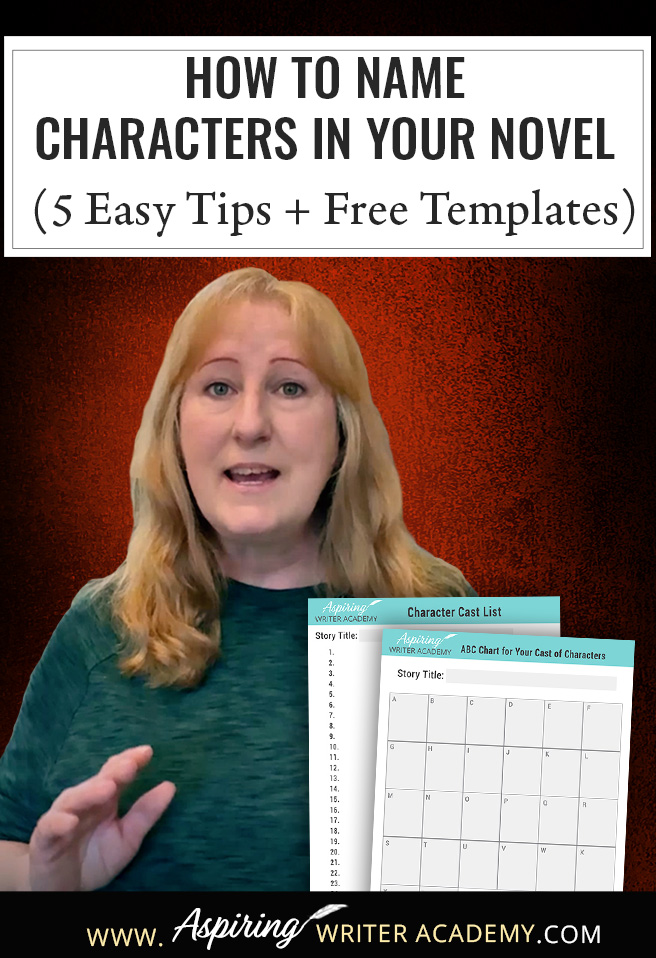
Choosing character names can feel surprisingly overwhelming when you’re writing a novel.
You want names that fit your story, reflect personality, feel memorable, and don’t confuse your readers. A character’s name often becomes one of the first impressions readers have, so it’s worth taking a little extra time to get it right.
The good news? Naming characters doesn’t have to be difficult.
In this post, I’m sharing 5 easy tips to help you choose strong character names for your novel, plus two free downloadable templates you can use to keep your cast organized while writing.
Whether you’re naming your hero, heroine, villain, or supporting cast, these tips will help you create names that work beautifully in your story.

1. Be Careful Using the Name of a Real Person
Sometimes writers want to name a character after someone they know in real life—a beloved grandparent, favorite aunt, close friend, or even a famous historical figure.
While this can be meaningful, it’s important to be cautious.
Using the full name of a real person can create unintended issues, especially if the character is portrayed negatively or too closely resembles that individual.
Even when using inspiration from someone you know, it’s usually best to:
- use only a first name
- create a fictional surname
- blend personality traits with fictional details
- add unique habits or quirks
This helps the character feel original while still honoring the inspiration.
It’s also wise to Google the name before using it to make sure it doesn’t strongly connect to a well-known public figure or someone with a negative association.
Readers often bring their own assumptions to names.
For example, if your kind-hearted hero shares the exact name of a notorious real-life criminal or controversial celebrity, readers may unconsciously attach those feelings to your character.
2. Choose Names That Match Personality
Names often carry a certain feeling.
Sometimes the sound of a name alone suggests personality, background, or tone.
For example:
- Daisy or Violet might feel soft, gentle, and feminine
- Three-Fingered Jack immediately sounds rough and dangerous
- Charles Harrington Wallace Stanford II suggests wealth or prominence
This can be a powerful tool in fiction.
Think about what kind of first impression you want the reader to have.
Does the name sound:
- warm?
- elegant?
- mysterious?
- intimidating?
- playful?
Sometimes writers also intentionally do the opposite for humor or contrast.
A large intimidating man named Little John is a classic example.
This kind of contrast can make a character especially memorable.
3. Use the Meaning Behind Names
A character’s name can also hold symbolic meaning.
Many names have roots in history, language, or culture that can support your story’s theme or character arc.
For example:
- David means beloved
- Charlotte means free
- Laura is associated with victory, honor, and triumph
If your character is on a journey of growth, healing, courage, or transformation, the meaning behind their name can subtly reinforce that journey.
This is especially effective when the name connects to:
- your story theme
- character growth
- symbolism
- foreshadowing
Ask yourself:
Who does this character need to become by the end of the story?
Sometimes the right name can beautifully echo that transformation.
4. Make Names Easy to Tell Apart
One of the biggest mistakes writers make is choosing names that sound too similar.
This can quickly become confusing for readers.
For example:
- David
- Daniel
- Don
Or:
- Hannah
- Savannah
- Susannah
Even if the names are different on the page, similar sounds can cause readers to pause and reread.
Pay attention to:
- starting letters
- ending sounds
- syllable patterns
- repeated suffixes
For example, too many names ending in:
- -ford
- -man
- -ham
- -son
- -ton
can begin to blend together.
You want each name to feel distinct and easy to recognize at a glance.
This helps readers stay immersed in the story instead of stopping to figure out who is who.
5. Use Templates to Keep Your Character Names Organized
This is where organization becomes incredibly helpful.
When writing a novel—especially one with multiple side characters—it’s easy to accidentally repeat letters, sounds, or similar names.
That’s why I recommend using two simple tools.
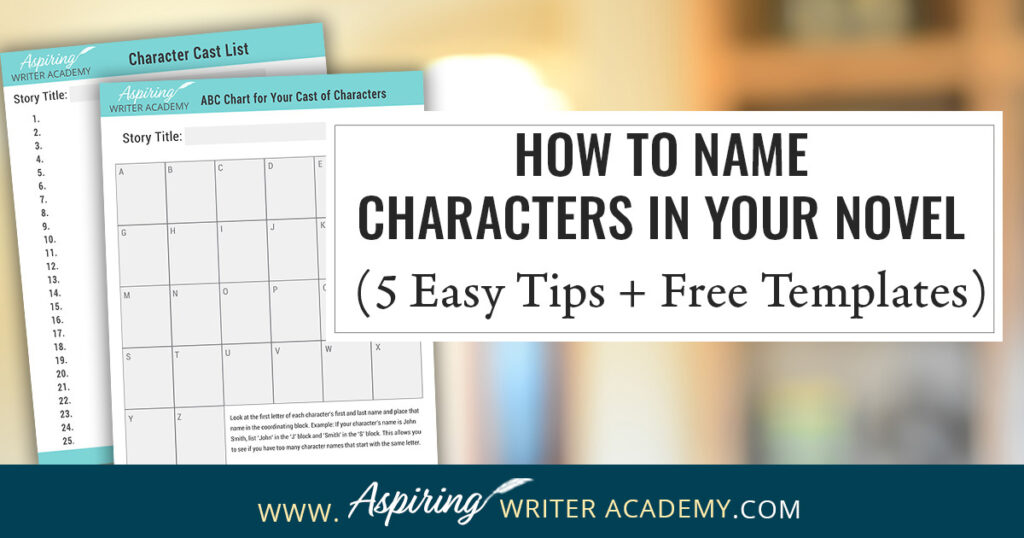
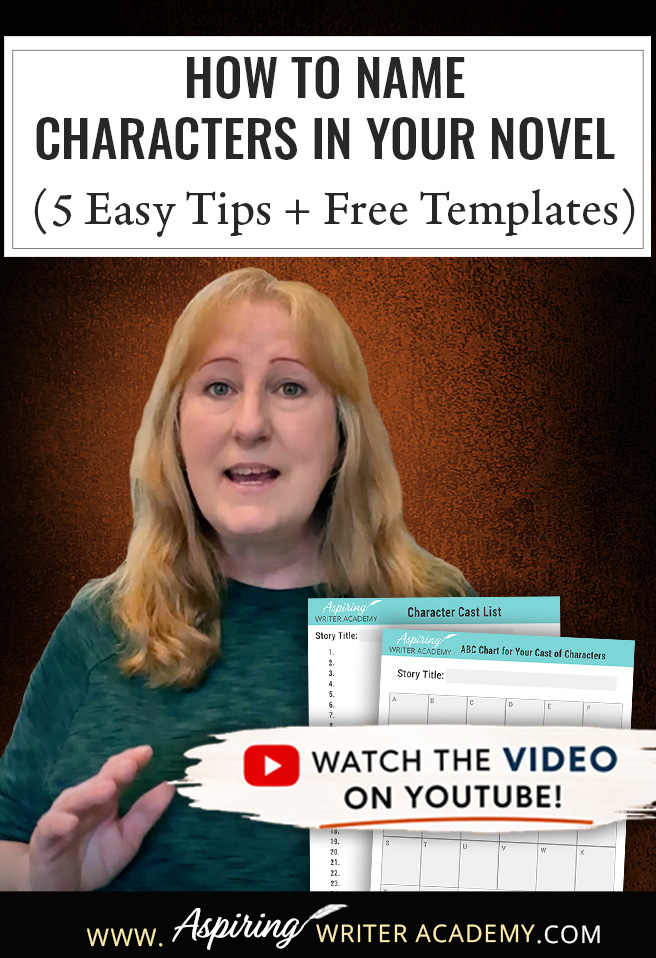
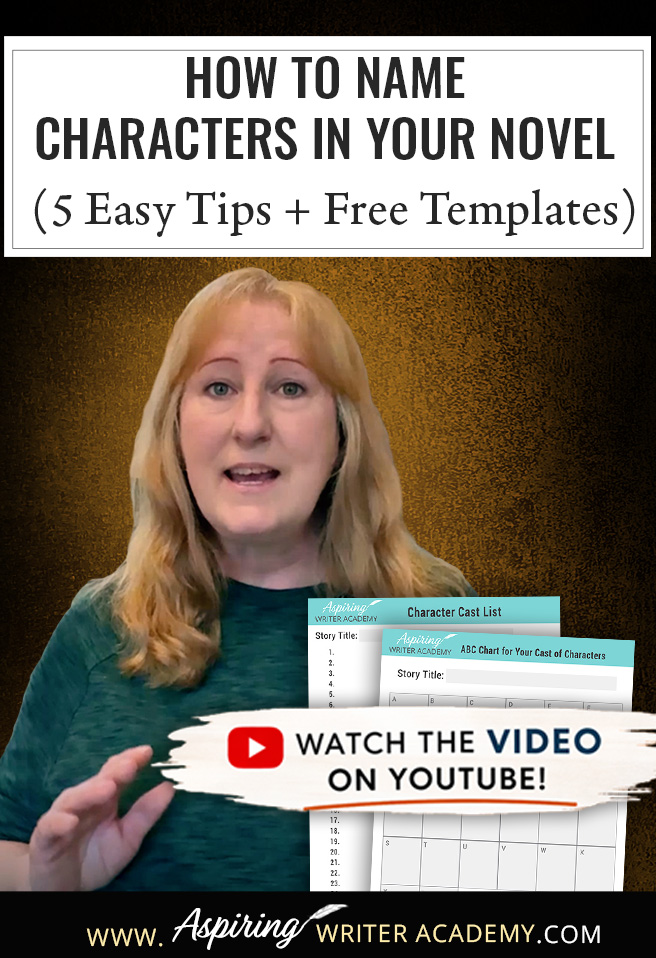
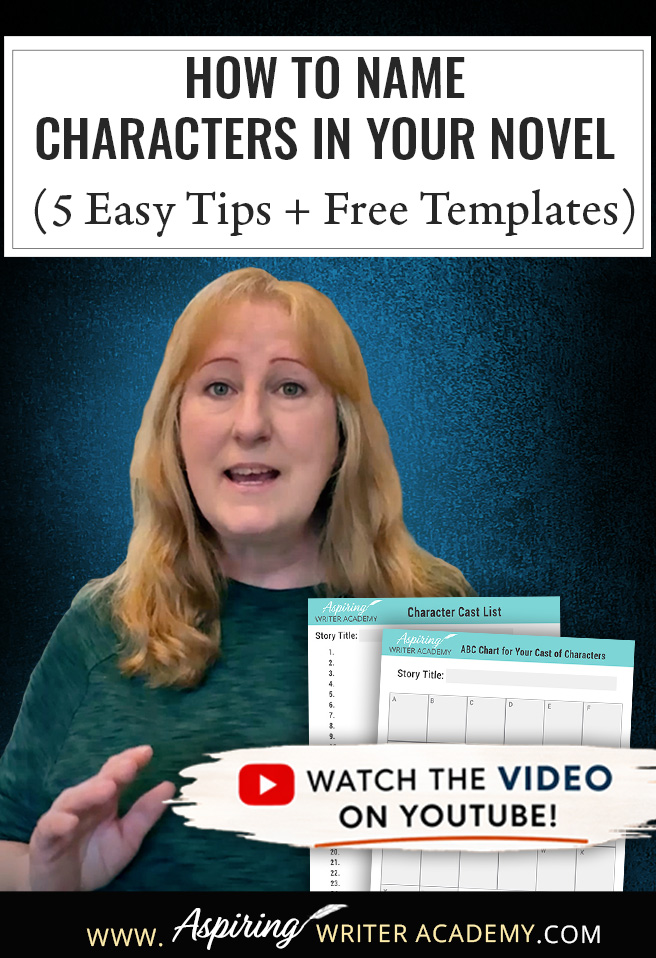
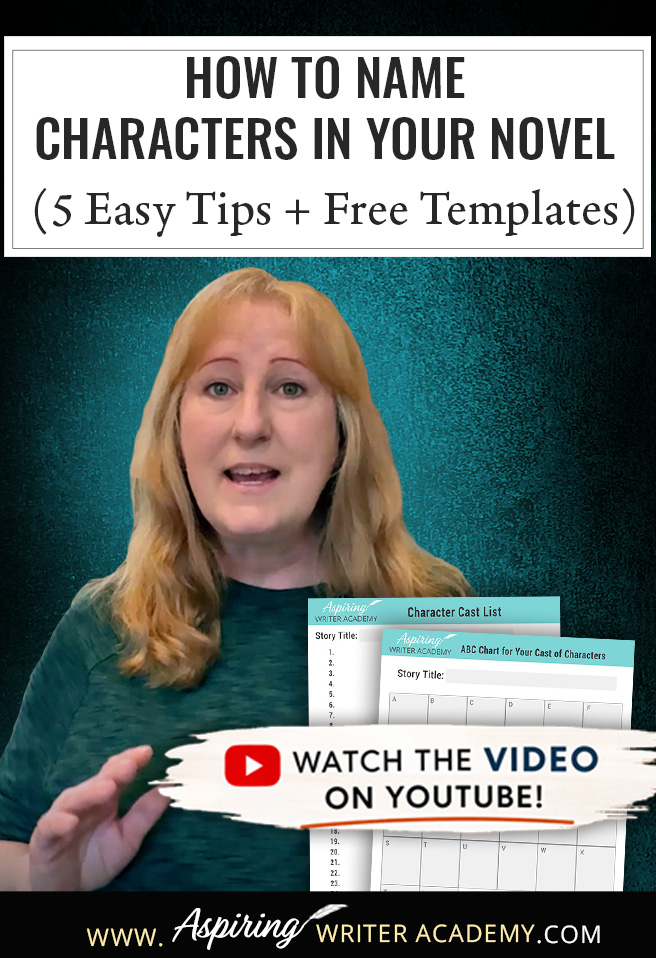
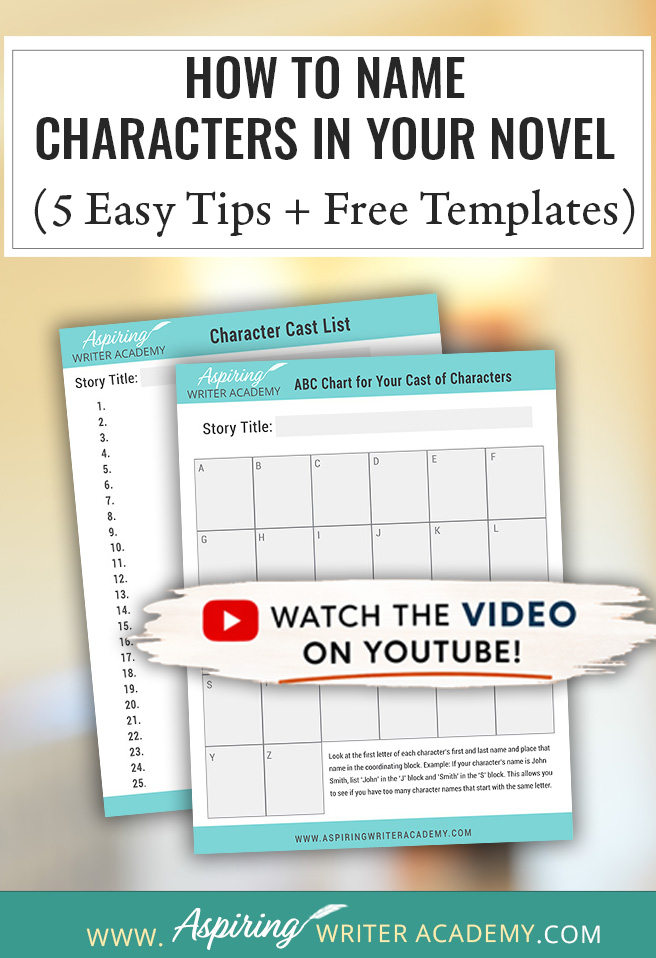
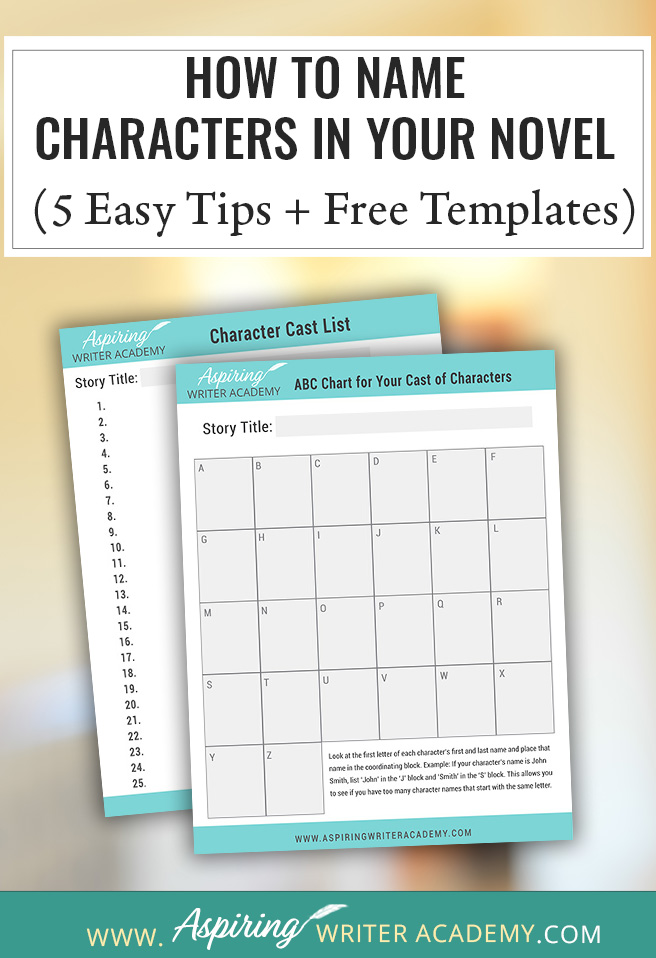
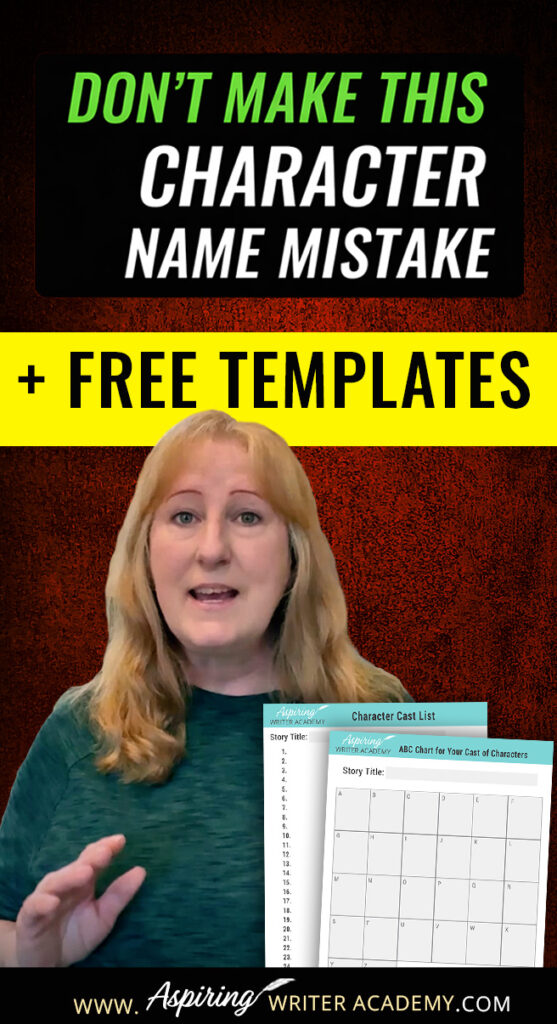
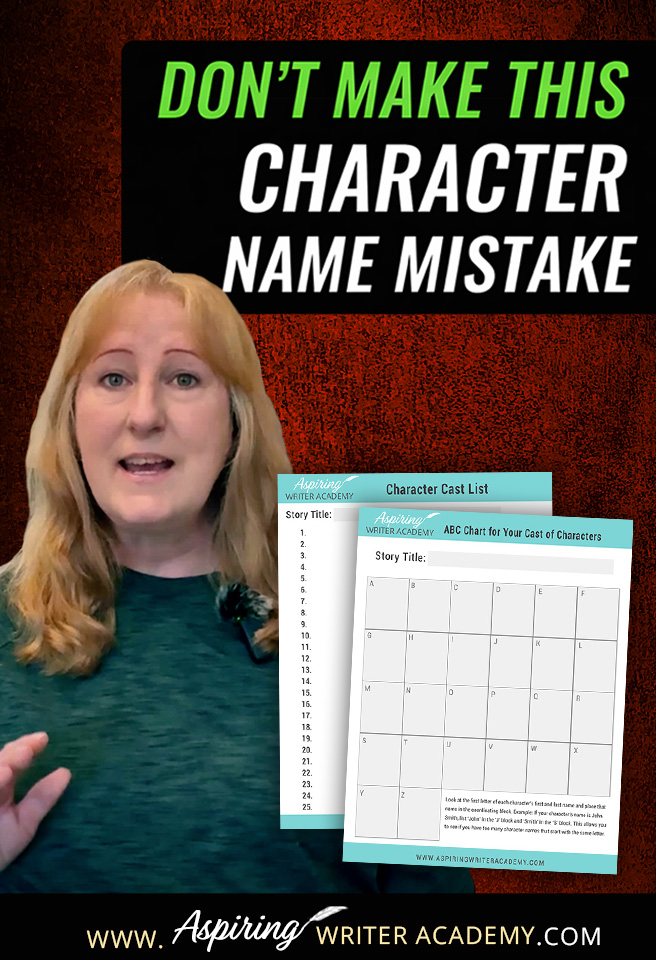
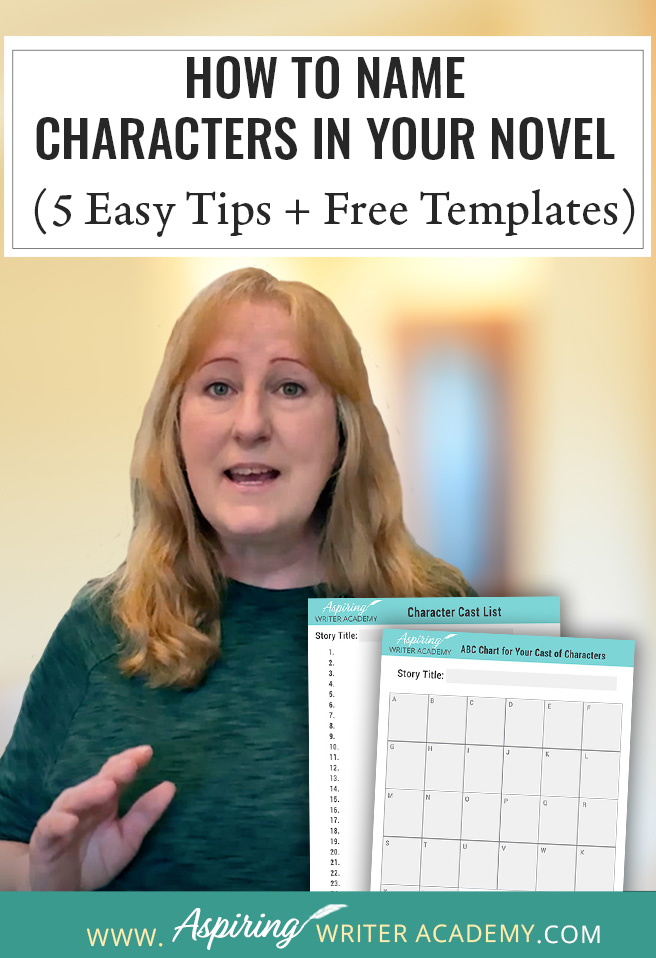
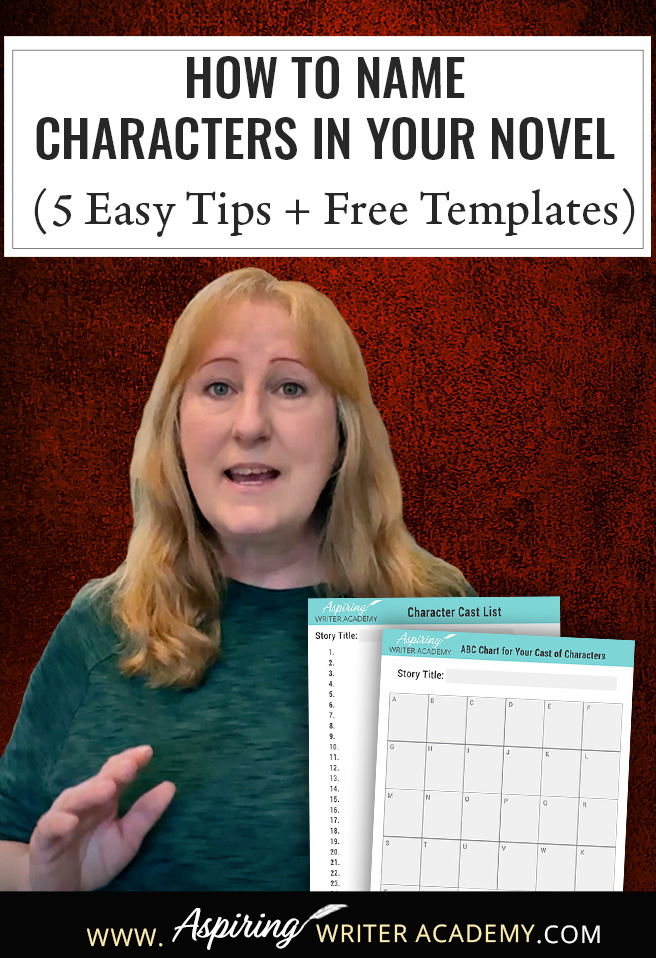
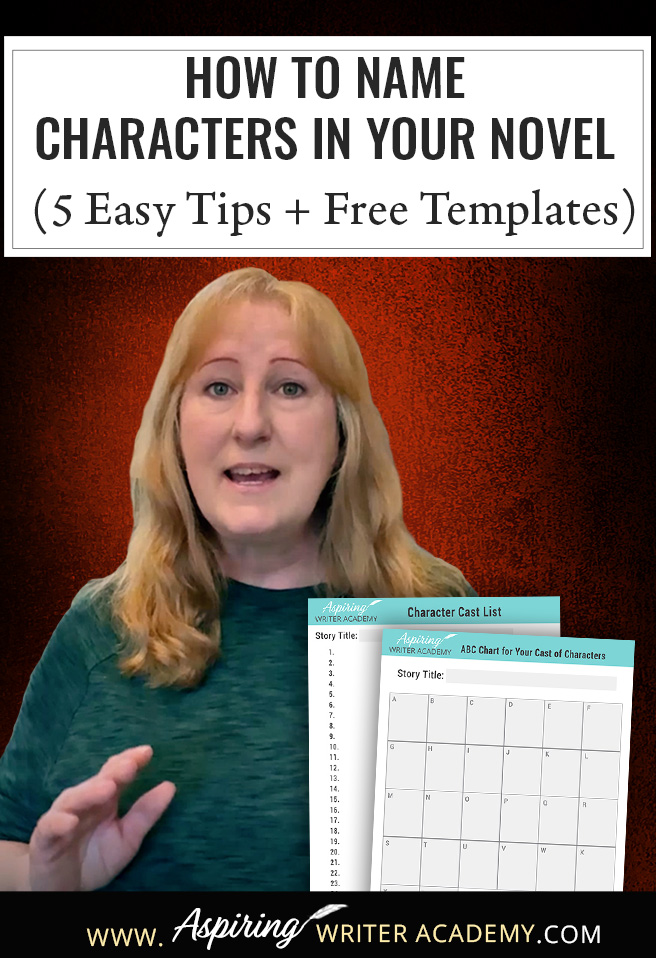
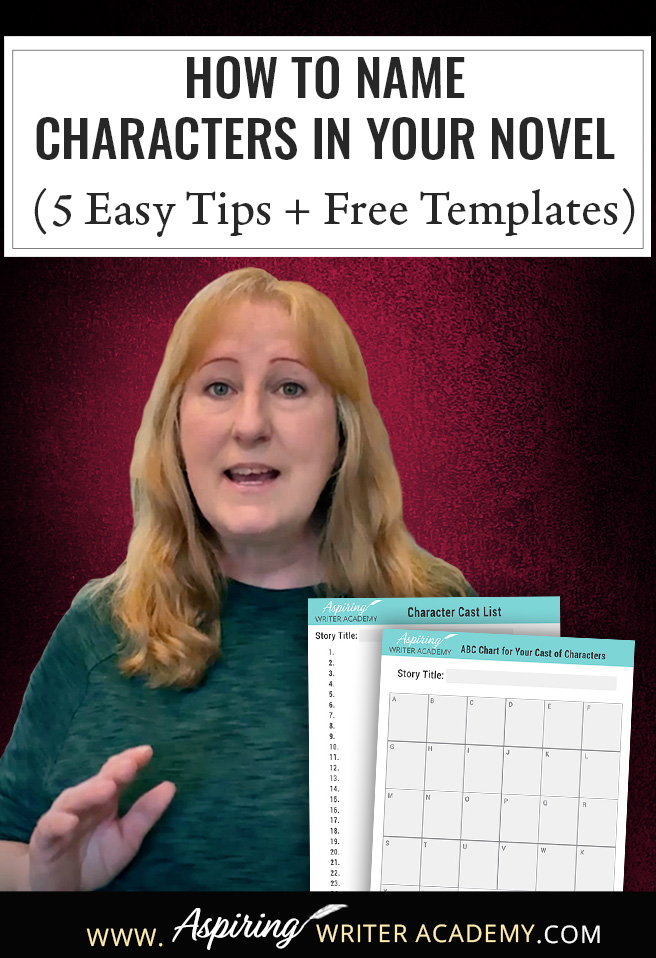
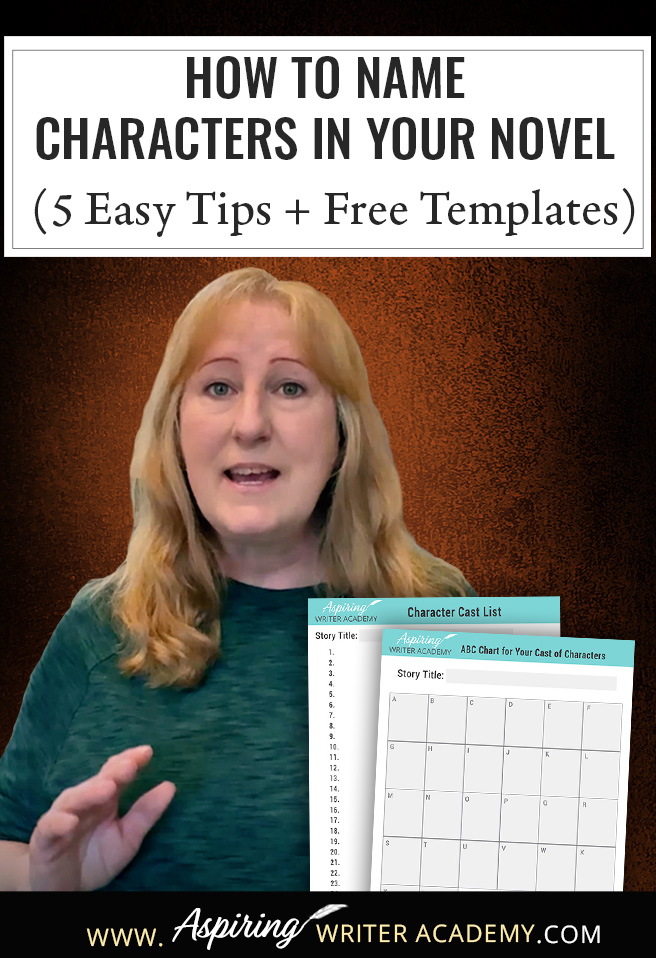
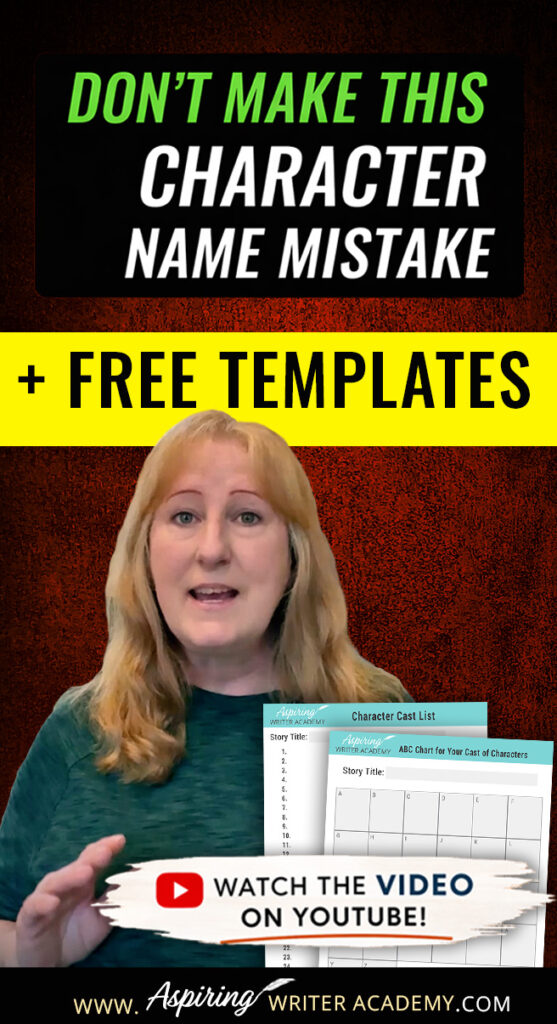
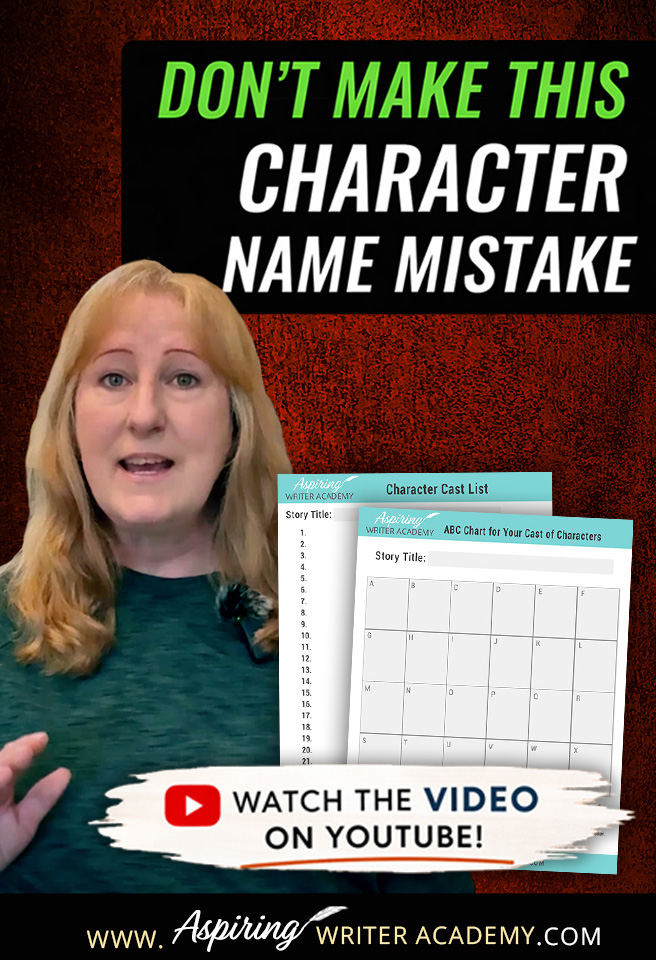
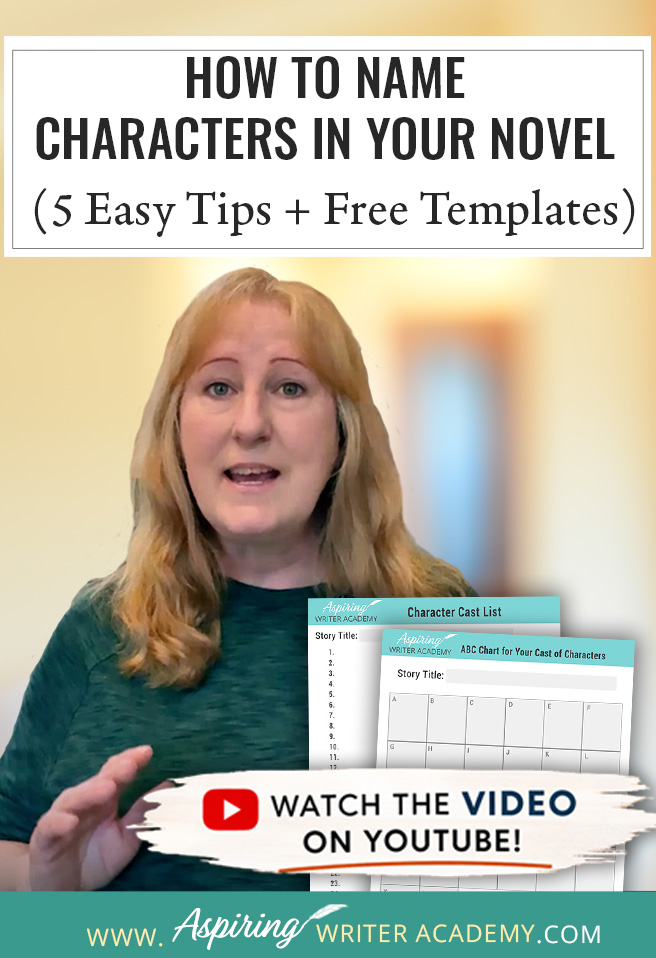
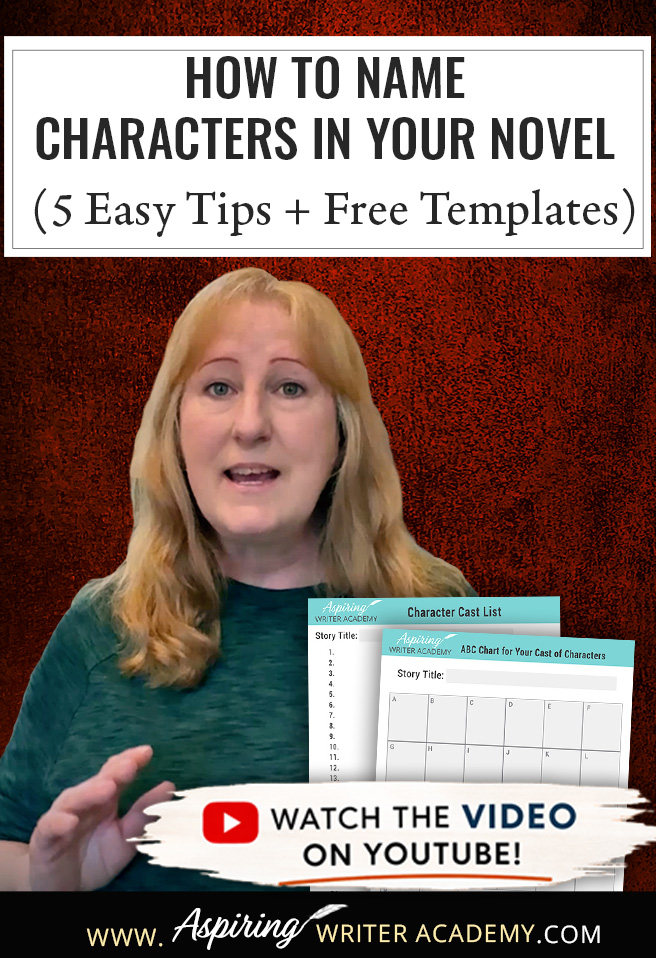
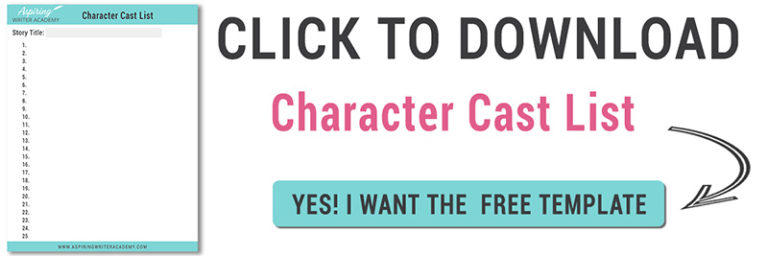
Free Template #1: Character Cast List
The Character Cast List helps you keep all your major characters in one place.
This includes:
- hero
- heroine
- antagonist
- supporting cast
- side characters
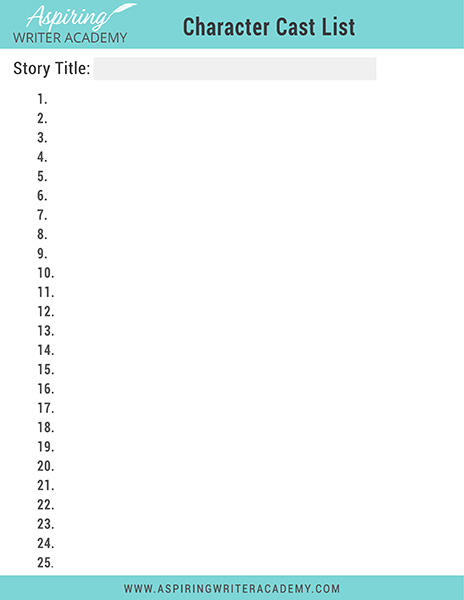
List both first and last names vertically so you can quickly compare them.
Example:
- Jennifer Watkins — heroine
- Michael Harrison — hero
- Tom Finley — antagonist
Seeing them side by side helps you catch names that may sound too similar.
Free Template #2: ABC Chart for Your Cast of Characters
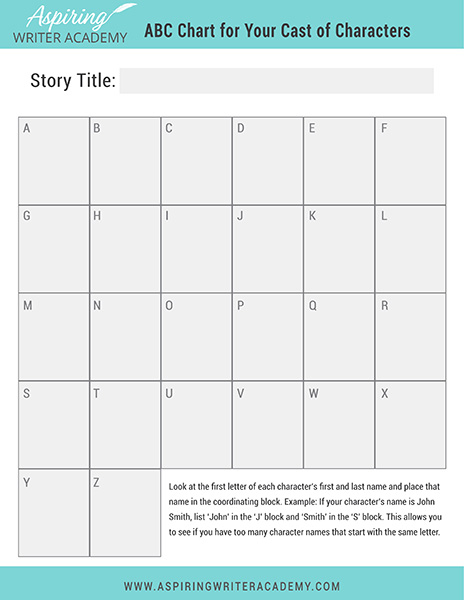
The ABC Chart is one of the easiest ways to visually organize names.
Create a simple chart with a section for each letter of the alphabet.
As you choose names, place them in the matching letter box.
Example:
- Jane → J
- Stanford → S
- Michael → M
This lets you quickly see if too many names start with the same letter.
If your M section is overflowing while letters like O or Q are empty, you may want to rename a few characters for better balance.
This is especially useful halfway through drafting when you suddenly need to name a new side character.
You can instantly see which letters haven’t been used yet.
Final Thoughts
Naming characters is more than simply picking names you like.
The right name can:
- strengthen personality
- support theme
- improve readability
- help readers remember your cast
Take your time with this part of the writing process.
Sometimes the perfect name comes immediately.
Other times, you may rename a character several times before it finally clicks.
That’s completely normal.
The important thing is choosing names that serve your story well.
Be sure to download the free Character Cast List and ABC Chart templates to help organize your cast as you write.
And if you’d like more help with plotting, character development, and story brainstorming, explore more writing resources here at Aspiring Writer Academy.
We Believe All Authors Can Aspire to Take Their Writing to the Next Level!
Our Goal for Aspiring Writer Academy is to help people learn how to write quality fiction, teach them to publish and promote their work, and to give them the necessary tools to pursue a writing career.
Before You Go… Grab This Free Resource!
If you’re in the early stages of writing your novel, don’t forget to download our free Brainstorming Your Story Idea Worksheet. It includes:
-
Fill-in-the-blank prompts
-
Story structure examples
-
Guided questions
-
Idea-boosting templates
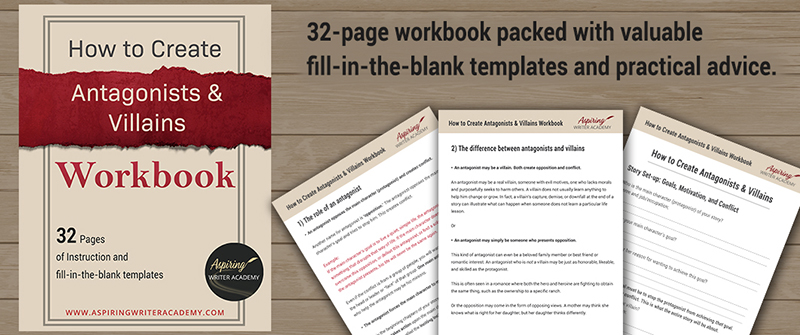
Do you find it difficult to create compelling antagonists and villains for your stories? Do your villains feel cartoonish and unbelievable? Do they lack motivation or a specific game plan? Discover the secrets to crafting villains that will stick with your readers long after they finish your story, with our How to Create Antagonists & Villains Workbook.
This 32-page instructional workbook is packed with valuable fill-in-the-blank templates and practical advice to help you create memorable and effective antagonists and villains. Whether you're a seasoned writer or just starting out, this workbook will take your writing to the next level.
Other Posts You May Like: