How to Write Act One (Opening Scenes of Your Novel)
Starting your novel can feel like the hardest part of the entire writing process.
You have a great idea… but then the questions hit:
- Where do you start?
- What actually belongs in Chapter One?
- When do you introduce backstory?
- What even is an inciting incident?
If you’ve ever felt stuck at the beginning, you’re not alone.
The good news? Once you understand what belongs in Act One, writing your opening scenes becomes so much easier.
In this post (and video below), we’re breaking down exactly what to include in the beginning of your novel so you can hook readers from page one.
🎥 Watch the Full Video
What Is Act One?
Act One is the setup of your story.
It introduces:
- Your main character
- The story world
- The central conflict
- The question that keeps readers turning pages
Typically, Act One covers the first 3–5 chapters of your novel.
1. Introduce a Strong Main Character
Your protagonist is the emotional anchor of your story.
Right from the beginning, you want readers to:
- Care about them
- Understand what they want
- Feel invested in what happens next
What to show early:
- A strength or admirable quality
- A flaw or internal struggle
- A short-term and long-term goal
- What they stand to lose
Your character should also face:
- Internal conflict (fear, doubt, past wounds)
- External conflict (a person, situation, or force working against them)
👉 A simple way to identify your true main character:
They’re the one with the most to lose and the biggest lesson to learn.
2. Establish the Setting (Your Story World)
Your opening scenes should ground the reader in the world of your story.
This includes more than just location. Think:
- Time period
- Environment and atmosphere
- Social norms or rules
- Daily life
Ask yourself:
- Where and when does this story take place?
- What makes this world unique?
- Does your character fit in—or stand out?
Important:
If your story includes fantasy or unusual elements (magic, talking animals, etc.), establish those early so readers know what’s normal in your world.
3. Reveal Genre, Theme, and the Story Question
Genre
Your opening should quickly signal what kind of story this is:
- Romance → a meet-cute or relationship tension
- Thriller → danger or high stakes early on
- Fantasy → unique worldbuilding elements
Theme
Subtly introduce the deeper message of your story.
For example:
- A character who struggles with forgiveness
- Someone who fears trust or vulnerability
These hints set up the character’s transformation later.
Story Question
This is what keeps readers hooked.
It’s the question they subconsciously ask while reading:
- Will they fall in love?
- Will they survive?
- Will they succeed?
Your entire story revolves around answering this.
4. Set the Tone with Pacing and Point of View
Your opening establishes expectations.
- Point of View (POV):
If you switch between characters, readers will expect that pattern to continue. - Pacing:
Fast-paced openings feel very different from slower, more reflective ones.
Whatever choices you make early on will shape how readers experience the rest of the story.
5. Write an Engaging First Scene
Your first scene does a lot of heavy lifting.
It should:
- Introduce your protagonist
- Show their personality and goals
- Place them in their normal world
- Present a small problem or situation
Avoid this common mistake:
Don’t overload your opening with backstory.
Instead:
- Start in the present moment
- Keep things active
- Reveal background details slowly over time
Pro tip:
Make your scene do multiple things at once (character + conflict + worldbuilding).
6. Hook Readers with Your First and Last Lines
First Line
Your opening line should spark curiosity.
Try:
- Dialogue
- A bold statement
- A hint of conflict
Don’t stress about perfection—you can always revise later.
Last Line of the Scene
End your scene with a hook.
Something that makes the reader think:
“Wait… what happens next?”
7. Introduce the Inciting Incident
About two-thirds of the way through Act One, something big happens.
This is the inciting incident.
It:
- Disrupts your character’s normal life
- Raises the stakes
- Forces them to act
Examples:
- A devastating piece of news
- A major opportunity
- A dangerous threat
This moment is what launches your story forward.
8. End Act One with Plot Point 1
Plot Point 1 is your character’s decision to act.
They go from:
 reacting to the problem
to choosing to face it
This decision:
- Sets the main story in motion
- Leads into Act Two
- Often involves forming alliances or committing to a goal
At this point, there’s no turning back.
Quick Act One Checklist
As you write your opening scenes, ask yourself:
- Have I introduced my main character clearly?
- Do we understand their goal and conflict?
- Is the setting grounded and believable?
- Is the genre clear?
- Have I created a compelling story question?
- Does my first scene hook the reader?
- Is there an inciting incident?
- Does Act One end with a strong decision (Plot Point 1)?
Final Thoughts
Act One is all about setup—but it should never feel slow or boring.
Your goal is simple:
Pull readers in and make them need to keep reading.
Once you understand the key pieces—character, setting, conflict, and structure—you’ll be able to write openings that feel clear, engaging, and purposeful.
We Believe All Authors Can Aspire to Take Their Writing to the Next Level!
Our Goal for Aspiring Writer Academy is to help people learn how to write quality fiction, teach them to publish and promote their work, and to give them the necessary tools to pursue a writing career.
Want Help Developing Your Story?
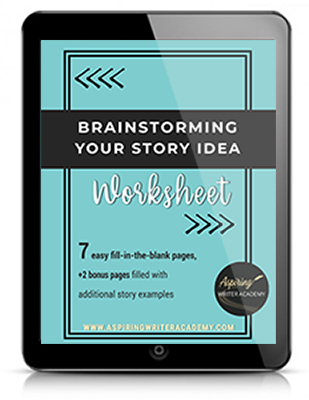
If you’re still figuring out your characters, plot, or story idea, grab our free brainstorming worksheet with fill-in-the-blank prompts to help you get started.
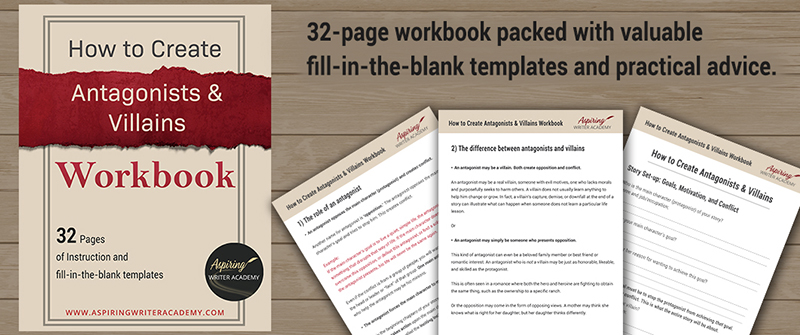
Do you find it difficult to create compelling antagonists and villains for your stories? Do your villains feel cartoonish and unbelievable? Do they lack motivation or a specific game plan? Discover the secrets to crafting villains that will stick with your readers long after they finish your story, with our How to Create Antagonists & Villains Workbook.
This 32-page instructional workbook is packed with valuable fill-in-the-blank templates and practical advice to help you create memorable and effective antagonists and villains. Whether you're a seasoned writer or just starting out, this workbook will take your writing to the next level.
Other Posts You May Like: