
12 Protagonist Mistakes That Frustrate Readers (And How to Fix Them)
A compelling protagonist can make readers fall in love with your story. A weak protagonist, however, can leave readers frustrated, disengaged, and unwilling to finish your book.
If you want readers eagerly turning pages, your protagonist needs to be someone they can understand, root for, and emotionally connect with. Unfortunately, many writers unintentionally create characters that drive readers away instead.
In this article, we'll explore twelve common protagonist mistakes writers make and how to fix them so your main character becomes the driving force behind an unforgettable story.
Watch the Video
1. Your Protagonist Can't Make Decisions
Readers quickly lose patience with a protagonist who constantly hesitates, changes their mind, or relies on others to make decisions for them.
Your protagonist should be an active participant in the story, not a passive observer. Their choices should drive the plot forward.
Fix It:
Give your protagonist meaningful decisions to make. Even when the choice is difficult, they should weigh their options and take action.
2. Your Protagonist Doesn't Have a Clear Goal
Every protagonist needs something specific to achieve.
A vague desire such as "I want to be happy" isn't enough to sustain an entire novel. Readers need a concrete objective they can root for.
Fix It:
Give your protagonist a SMART goal:
- Specific – Clearly defined.
- Measurable – Progress can be tracked.
- Attainable – Difficult but possible.
- Relevant – Matters deeply to the character.
- Time-Bound – Includes a deadline or ticking clock.
When readers know what your protagonist wants, they'll keep turning pages to find out whether they succeed.
3. The Conflict Isn't Focused on the Protagonist
Sometimes writers create conflict that primarily affects side characters or entire groups rather than the protagonist.
If the protagonist isn't at the center of the struggle, readers may wonder why they're the main character.
Fix It:
Make the conflict personal. The protagonist should be directly targeted by the opposition and uniquely positioned to resolve the problem.
Likewise, give your antagonist a recognizable face rather than making them feel vague or distant.
4. Your Protagonist Isn't Relatable
Readers don't need to agree with every decision your protagonist makes, but they do need to understand those decisions.
When characters repeatedly make choices that seem foolish or illogical, readers become frustrated.
Fix It:
Show the reasoning behind your protagonist's actions.
If they choose a dangerous path, reveal their fears, motivations, or emotional stakes so readers understand why they made that choice.
5. Your Protagonist Acts Out of Character
Consistency builds trust between the writer and the reader.
If a smart, mature protagonist suddenly behaves irrationally without explanation, readers may feel manipulated.
Example: A smart, mature character should not just childishly say, "I am not going to talk to that person" and throw an emotional, immature tantrum. It doesn't fit with the character shown so far.
Fix It:
Ensure your protagonist's actions align with their established personality, values, and experiences.
If they behave differently, provide a believable reason for the change.
6. The Character's Actions Aren't Properly Motivated
Readers need to understand why characters do what they do.
This mistake often appears in romance stories when characters suddenly fall in love without sufficient development, or when characters change their beliefs overnight.
Fix It:
Build motivation through gradual emotional development, experiences, and internal reflection.
Character growth should happen through small, believable steps.
7. Your Protagonist Has No Character Arc
A memorable story changes the protagonist.
By the end of the novel, your main character should think, believe, or behave differently than they did at the beginning.
Fix It:
Identify your protagonist's flaw or weakness.
Then design story events that challenge that flaw and force growth.
For example:
- Beginning: Unable to forgive.
- End: Learns to forgive.
This transformation often reveals the theme of your story.
8. The Character's Past Feels Hidden or Irrelevant
Backstory should explain why your protagonist behaves the way they do.
Without meaningful backstory, characters can feel disconnected and shallow.
Fix It:
Give your protagonist a defining wound or experience from their past.
Ask yourself:
- What hurt them?
- What belief did they form because of that hurt?
- How does it affect their current choices?
The answers can provide powerful emotional depth.
9. Your Protagonist Is Bland
Readers remember unique characters.
If your protagonist feels generic, readers may struggle to become emotionally invested.
Fix It:
Develop distinct characteristics such as:
- Speech patterns
- Hobbies
- Talents
- Quirks
- Perspectives
- Personal history
Most importantly, let readers experience the world through the protagonist's thoughts, emotions, and senses.
10. Your Protagonist Is Too Perfect (or Too Terrible)
Perfect characters feel unrealistic.
Likewise, protagonists who possess nothing but negative qualities are difficult to root for.
Fix It:
Create a balance of strengths and weaknesses.
A useful approach is to give your protagonist:
- Three positive traits
- One meaningful flaw
The flaw creates opportunities for growth while the strengths keep readers invested.
11. Your Protagonist Doesn't Learn From Mistakes
Readers admire characters who grow.
When a protagonist repeatedly makes the same mistake without learning anything, it can feel frustrating and repetitive.
Fix It:
Show your protagonist applying lessons they've learned.
By the climax, they should face a similar challenge and make a better choice than they would have made at the beginning of the story.
12. Your Protagonist Doesn't Resolve the Story
One of the fastest ways to disappoint readers is to have someone else solve the protagonist's problem.
Readers have invested in your main character's journey. They want to see that character earn the victory.
Fix It:
Ensure the protagonist plays the central role in the climax and resolution.
Supporting characters can help, but the protagonist should be the one who ultimately confronts the opposition and determines the outcome.
Final Thoughts
A strong protagonist doesn't need to be perfect. In fact, flaws, mistakes, and struggles are what make characters relatable.
What matters is that your protagonist actively pursues a goal, faces meaningful obstacles, learns from mistakes, and grows throughout the story.
When readers connect with your protagonist, they'll keep turning pages because they genuinely care about what happens next.
We Believe All Authors Can Aspire to Take Their Writing to the Next Level!
Our Goal for Aspiring Writer Academy is to help people learn how to write quality fiction, teach them to publish and promote their work, and to give them the necessary tools to pursue a writing career.

Before You Go… Grab This Free Resource!
If you’re in the early stages of writing your novel, don’t forget to download our free Brainstorming Your Story Idea Worksheet. It includes:
-
Fill-in-the-blank prompts
-
Story structure examples
-
Guided questions
-
Idea-boosting templates
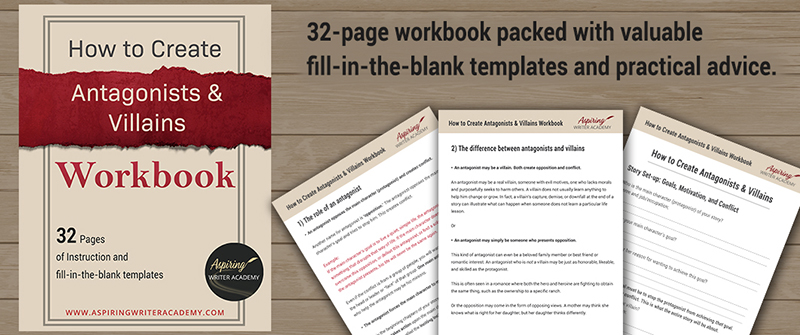
Do you find it difficult to create compelling antagonists and villains for your stories? Do your villains feel cartoonish and unbelievable? Do they lack motivation or a specific game plan? Discover the secrets to crafting villains that will stick with your readers long after they finish your story, with our How to Create Antagonists & Villains Workbook.
This 32-page instructional workbook is packed with valuable fill-in-the-blank templates and practical advice to help you create memorable and effective antagonists and villains. Whether you're a seasoned writer or just starting out, this workbook will take your writing to the next level.
Other Posts You May Like: