How to Defend the Copyright of Your Fictional Novel

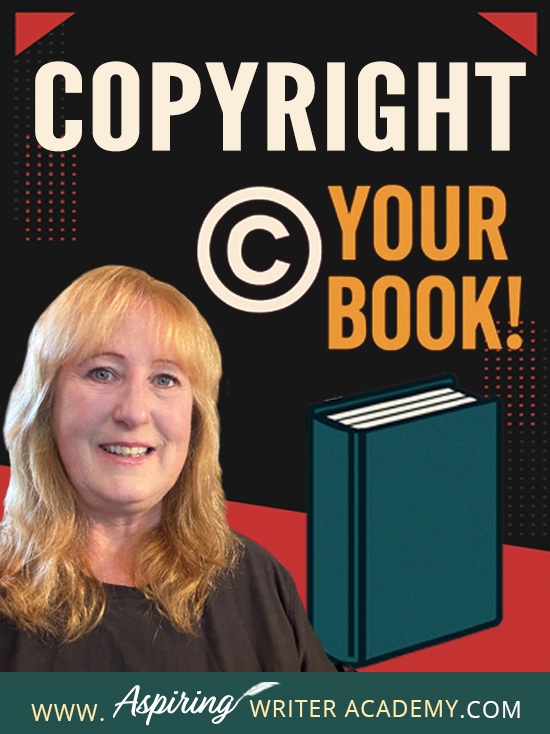

Looking to protect your rights as an author? Wondering if you should copyright your fiction novel and how to prevent others from stealing it?
In How to Defend the Copyright of Your Fictional Novel, learn straightforward ways to protect your work from theft and piracy. Discover how to confidently defend your creative rights and keep your story safe as you build your writing career.
In the post below we will discuss:
- Standing Up For Your Rights as an Author
- Plagiarism, Piracy, & Unauthorized Use
- How to Copyright Your Novel

1. Standing Up for Your Rights as an Author
A few weeks ago, I had a writer-friend call me up for advice.
She has written and published several middle grade chapter books with a small press. Her book covers are wonderful and all in all it seems like this publisher is a good fit for her budget, needs, and expectations.
The opportunity:
This small publisher sent this woman – let’s call her “Mary” - an email asking if she would allow her story to be included in the production of a board game. It seemed like a fun idea and a great promotion opportunity. Mary assumed the company would use one of the stories from her published series.
The dilemma:
However, the head of this small publishing company has been good friends with a man for over 20 years – let’s call him “Bill” - who also publishes his stories through the small press. This man has read all of Mary’s stories to his daughter who absolutely loves them. To protect those involved, let’s just say for example that Mary’s stories are about “fairies” in a uniquely developed “fairy world” called “Flower Valley.” Each book in the series focuses on a different “fairy.” Since Mary did not have a new book in the series come out soon enough, this man, Bill, decided to write his own “Flower Valley” fairy story, using Mary’s character’s, their names, and the story world to please his daughter.
Here's where it gets even worse…
And now, the publisher wanted Mary’s permission for this guy, Bill, to publish the “fairy” adventure story he wrote using her characters and use it for the board game instead of one of her own stories!
Of course this distressed Mary, who did not want to say no and disappoint her publisher. She feared they might drop her as an author. But she was upset at the thought of another writer using her characters, and the story world that she created. The publisher said her name would be included in a byline that stated the original Flower Valley concept had been created by her.
But still…it left her feeling unsettled, feeling hijacked, and she couldn’t sleep. That’s when she called me, her former writing coach, for advice.
How should she respond to this situation?
Well, I have to tell you that as soon as I heard this, I was livid! This is all sooooo wrong on so many different levels!!!!
- First, how dare this guy Bill think he could steal Mary’s characters and publish his own books using her ideas and a story world that she created! He would be okay privately writing a story just for his daughter to read at bedtime, but he cannot even think of publishing it. The same would be true if he wanted to publish a ‘Star Wars’ novel or a ‘Harry Potter’ novel without consent from the creator of those story worlds. There would be lawsuits filed so fast! An author cannot steal another author’s work. If this author wants to write about fairies, let him create his own fairy characters and his own unique story world, but he cannot use what another author already created.
- Second, the publisher, the head of the small press should know this! What kind of publisher is this that would even think to ask Mary such a thing? And use his long-term friendship with Bill as potential leverage?
- After a lot of ranting and raving and foot stomping on Mary’s behalf, I told her that she needed to stand up for her rights as an author. “Never let someone bully you for fear they might drop you as an author and no longer publish your books.” The whole situation was making her sick, and she needed to listen to her gut instinct.
The Solution:
Mary emailed the publisher and said that she was not comfortable having another author write a story for the board game using her characters, ideas, and story world. She felt Bill had overstepped his authority as an author and explained why. She stood up for her rights, regardless of the consequences. Politely. Professionally.
Thankfully, the publisher respected Mary enough to allow her to write the story for the board game. His friend, Bill, even offered to let her use his ideas for the story, which Mary said she’d take under consideration since the board game was already being developed, but that she’d like to make the storyline for both the book and the accompanying board game her own.
Not only had Mary stood up for herself as an author, but she also avoided a court case over the issue. I might also add that Mary is an older author, who probably would not have wanted to take such measures. Which brings up another issue: those trying to take advantage of the elderly.
Know your rights as an author and protect your creative work!
2. Plagiarism, Piracy, & Unauthorized Use
Plagiarism
When someone copies—literally steals—a body of work created by another author, this is called plagiarism. Under copyright law, this is an illegal practice. This includes full scenes that are copied word for word without the original author’s permission.
This can happen either intentionally or unintentionally when working closely together with other authors in critique groups. The content of a scene can seem so familiar, that an author can believe that they were the one who first created it, even using the same wording, and place the same exact scene into their own novel. (While this is something to look out for, I do think having a critique group with the right people is a wonderful thing!)
Piracy
Unfortunately, there are also many without morals who steal author’s stories off the internet and put them up for sale on their own websites. Authors do not receive any royalties from these sales. The books are usually offered at a discount to attract buyers. Many buyers do not even realize that these books are on a pirated site.
Authors are usually furious to find their books on these pirated sites, but the sad truth is that it is usually too difficult to combat the situation. As soon as you contact the site and demand that they take your book down, or file a complaint to shut the website down, the owners of those sites will just pop up the very next day selling your book on a new pirated website. Like the game ‘whack-a-mole,’ or like trying to block those relentless phone solicitors that just keep calling back from a different number, the process to combat book piracy can become exhausting and not worth the effort.
If you are traditionally published and discover your books on one of these sites, you can contact the publisher and let them know. Big publishers usually have someone to try to stop piracy on your behalf. Your agent may also have a team to help shut down piracy.
If self-published, you can report these book pirates to Amazon and try to contact these piracy sites yourself to try to get them take your book off their lists, but many authors decide it is not worth the effort and comfort themselves by looking at book piracy as another means of promotion. If a buyer reads and likes your book, perhaps they will give you a good review on other sites or buy your next book and join your mailing list.
Rather than fight piracy, which can become a full-time job, sometimes it is better to just write the next book.
Unauthorized Use
The opening example of my friend, Mary, and her publisher asking her to consent to allow another author to publish his own book using her story characters and story world and also use it to create a board game is an example of how a book can be stolen for unauthorized use. If the publisher of the small press did not ask Mary permission or went against her wishes and published another book related to her story world anyway, this would give Mary grounds to file a lawsuit against them. Luckily, for Mary, it all turned out well.
Many seasoned authors are upset with A.I. companies right now for using their books to train A.I. programs. The Author’s Guild is trying to bring attention to this practice and perhaps gain royalties for the authors whose books are involved.
Another example of unauthorized use is when a company uses one of your renowned book characters or fictional story world to promote a product or service without your consent.
3. How to Copyright Your Novel
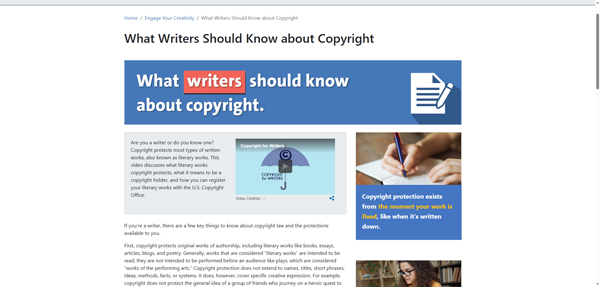
Copyright protection exists from the moment your work is created in a tangible fixed format, such as handwritten pages or typed as a computer document. As soon as you write the first chapter of your novel, it is copyrighted. No one else should be able to steal it.
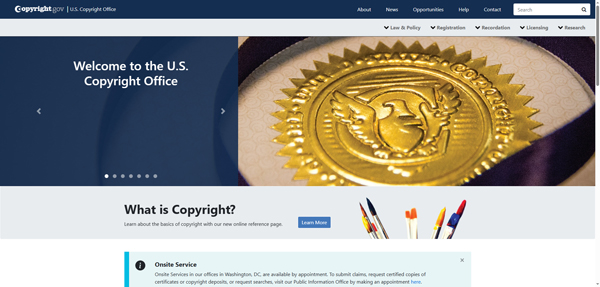
However, if you live in the U.S., you should also consider registering your fictional novel with the U.S. Copyright Office once it is completed. This allows you the ability to create a public record and access the federal courts and the Copyright Claims Board in cases of infringement. If your novel is used unlawfully, without your permission, you—the author—have the right to pursue legal action against the perpetrator.
The 3-month rule for Copyright:
According to the U.S. Copyright Office —
“Copies of all works under copyright protection that have been published or distributed in the United States must be deposited with the Copyright Office within
3 months of the date of first publication.”
What is the process?
To register your fictional novel, you will need to:
- fill out an application (the standard application for a single manuscript, the group application if filing for an anthology with other authors.)
- pay a filing fee (as of May 2025 the standard application is $65. While a paper filing is $125.)
- upload a copy of your book to the U.S. Copyright Office.
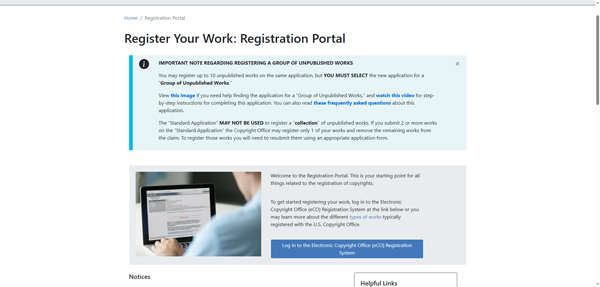
Use the links below to learn more about Copyright and to register your novel:
U.S. Copyright office
What you cannot Copyright:
- An author cannot copyright or lay claim to a book title. Just go on Amazon and you will see there are many books with the same name.
- Nor can an author copyright an ‘idea.’ Many books and movies have very similar plots.
- Sometimes two or more books will even have characters with the same name, which may be coincidental, although your character should be unique from another author’s character with the same name, and you should never have an entire cast of characters from another author’s book. You should also never use names that are franchised, such as ‘Luke Skywalker’ and ‘Harry Potter.’
Other Considerations:
- Email yourself a copy of your finished manuscript and keep it in a file on your computer. The date stamp proves when the story was uploaded. As you write you may want to save different versions of your original work or save it chapter by chapter. Always save and date your work.
- After finishing a fictional novel, keep your research, physical notes, idea maps, or sketched outlines in a manila folder even after the book is published to prove the story is yours and was truly your own creation if the need should ever arise. You can also keep digital notes and files saved from the story on an external hard drive. Don’t throw your original notes out just because the book is published.
- Add the copyright symbol to the front of your manuscript. If you write blogs or create worksheets for a class you teach, include the copyright symbol, your name, and the date in the header of the document. Also always save and date a copy of these docs on your computer or to keep in your files.
- Many beginning writers are obsessed about copyright and fear others will steal their work. While this can sometimes happen, the better option is to keep brainstorming, plotting, creating characters, writing, and improving your skills with each new book.
Depending on the situation, you must decide whether it is worth your time and effort to stand up for your rights as an author or if it is best to just let the infraction go.
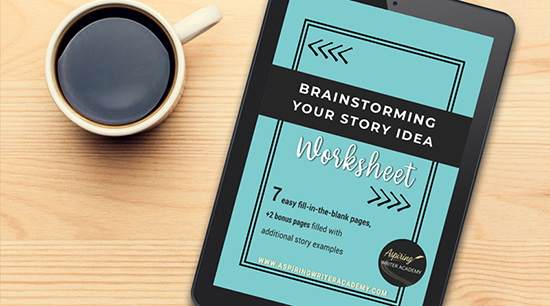
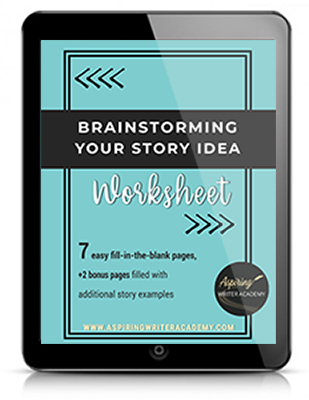
If you like more help developing your story, you may wish to download our Free Brainstorming Your Story Idea Worksheet
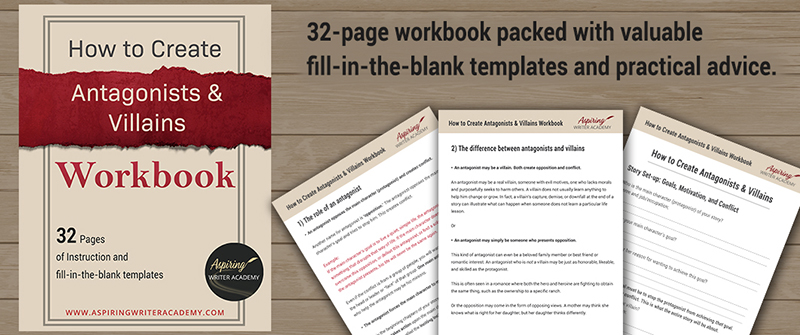
Do you find it difficult to create compelling antagonists and villains for your stories? Do your villains feel cartoonish and unbelievable? Do they lack motivation or a specific game plan? Discover the secrets to crafting villains that will stick with your readers long after they finish your story, with our How to Create Antagonists & Villains Workbook.
This 32-page instructional workbook is packed with valuable fill-in-the-blank templates and practical advice to help you create memorable and effective antagonists and villains. Whether you're a seasoned writer or just starting out, this workbook will take your writing to the next level.
Other Posts You May Like:


We Believe All Authors Can Aspire to Take Their Writing to the Next Level!
Our Goal for Aspiring Writer Academy is to help people learn how to write quality fiction, teach them to publish and promote their work, and to give them the necessary tools to pursue a writing career.
ENTER YOUR EMAIL BELOW
TO GET YOUR FREE
"Brainstorming Your Story Idea Worksheet"
7 easy fill-in-the-blank pages,
+ 2 bonus pages filled with additional story examples.
A valuable tool to develop story plots again and again.