How to Structure a Scene That Keeps Readers Hooked: Scene & Sequel

Ever wondered why some stories grab your attention and never let go, while others feel flat or aimless? The secret often lies in how each scene is structured — and how well it flows into the next.
In this video, author Darlene Panzera (who’s written over 16 books, both traditionally and self-published) breaks down the art of writing a powerful scene using the classic Scene & Sequel structure. Watch the video below, then keep reading for a step-by-step breakdown.

Why Scene Structure Matters
Every scene should do two key things:
-
Move the story forward
-
Keep readers emotionally invested
When you give your character a clear goal, obstacles to overcome, and meaningful consequences, your reader is pulled into the story and has to turn the page to find out what happens next.
Step 1: Start with a Strong Scene Goal
Your point-of-view character should always enter a scene with a clear goal.
Ask yourself:
-
What does my character want in this particular scene?
-
Why do they want it?
-
What happens if they don’t get it?
A strong goal gives the reader something to root for and creates tension that drives the story.
Example of a strong goal:
Sally marched up to the service counter, determined to get a refund for the damaged package that had arrived on her doorstep.
Example of a weak goal:
Sally opened her damaged package, then called a few friends to ask what she should do.
The second example doesn’t move the story forward — your character should always be doing, not thinking about doing.
Step 2: Add Three Sources of Conflict
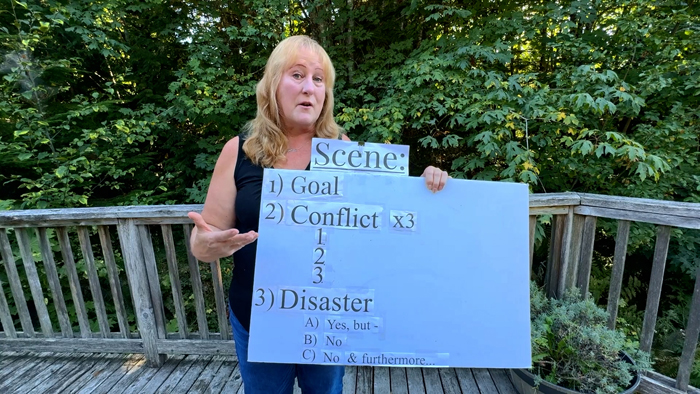
Once your character sets a goal, throw in three sources of conflict that stand in their way.
Conflict doesn’t always mean a physical fight — it can be an internal struggle, a disagreement, or a force of nature. The key is that each conflict directly opposes the character’s goal.
Examples:
-
A rival challenges their plan
-
An unexpected obstacle complicates things
-
A misunderstanding raises emotional tension
Each conflict builds momentum and keeps the reader invested in the outcome.
Step 3: End with a Scene Disaster
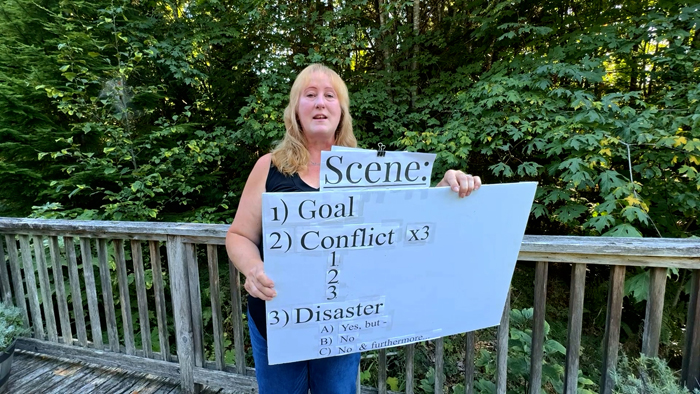
At the end of every scene, include a disaster — something that prevents your character from fully achieving their goal. This keeps readers turning the page to see what happens next.
There are three possible types of scene disasters:
-
Yes, but…
-
The character achieves their goal, but with negative consequences.
Example: She got the boy’s attention — but only because she tripped and made a fool of herself in front of everyone.
-
-
No.
-
The character fails to reach their goal.
Example: Her father refuses to give her the loan she asked for, forcing her to turn to someone else for help.
-
-
No, and furthermore…
-
The character not only fails, but the situation gets worse.
Example: She didn’t get the evidence she needed — and now the villain knows she was snooping and wants to kill her.
-
Each type of disaster raises new questions and tension in the reader’s mind. It’s your mini cliffhanger — a hook that makes them read on.
Step 4: Follow with a Sequel (The Character’s Reaction)
Once your scene ends in disaster, you need a sequel — a short pause that lets the character (and reader) process what just happened.
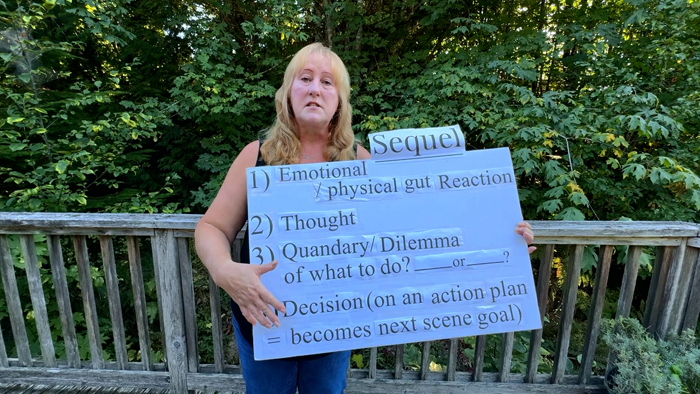
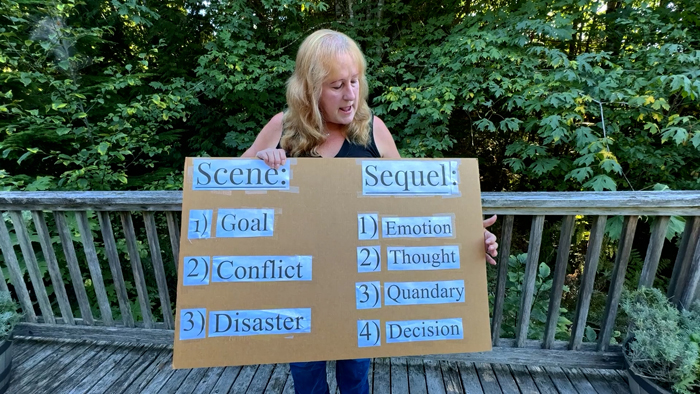
Think of the sequel as your story’s breathing space. It often includes four parts:
-
Reaction – The character’s immediate, involuntary emotional response.
Example: Her heart pounded. Tears welled in her eyes. She gasped in shock.* -
Thought – The internal processing.
What just happened? Why did it go wrong? -
Quandary – The moment of decision.
The character weighs their options — usually narrowed down to two. -
Decision – The choice that sets up the next scene’s goal.
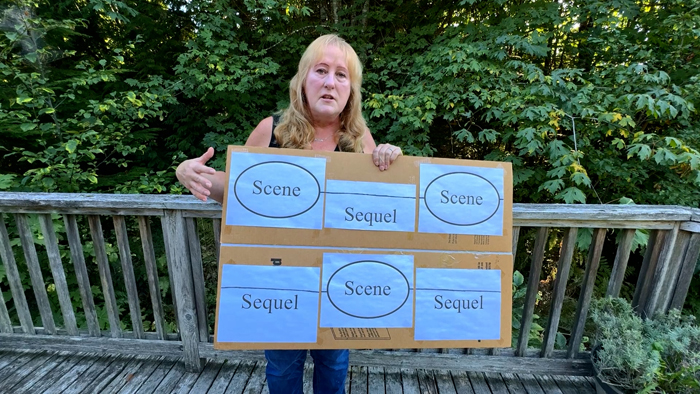
This Scene–Sequel rhythm creates a natural flow: action → reflection → new action.
Over time, these beats form the backbone of your entire novel:
Scene → Sequel → Scene → Sequel … all the way to “The End.”
Putting It All Together
To recap:
-
Scene Goal – What your character wants.
-
Conflict – What stands in their way (at least three sources).
-
Disaster – How the scene ends and raises the stakes.
-
Sequel – How your character reacts, reflects, and decides what to do next.
When you master this pattern, your scenes will naturally build tension, emotion, and momentum — keeping readers hooked from start to finish.
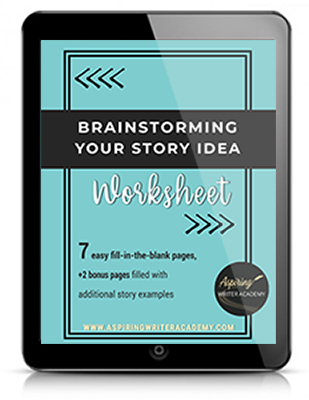
If you like more help developing your story, you may wish to download our Free Brainstorming Your Story Idea Worksheet
Do you find it difficult to create compelling antagonists and villains for your stories? Do your villains feel cartoonish and unbelievable? Do they lack motivation or a specific game plan? Discover the secrets to crafting villains that will stick with your readers long after they finish your story, with our How to Create Antagonists & Villains Workbook.
This 32-page instructional workbook is packed with valuable fill-in-the-blank templates and practical advice to help you create memorable and effective antagonists and villains. Whether you're a seasoned writer or just starting out, this workbook will take your writing to the next level.
Other Posts You May Like:




We Believe All Authors Can Aspire to Take Their Writing to the Next Level!
Our Goal for Aspiring Writer Academy is to help people learn how to write quality fiction, teach them to publish and promote their work, and to give them the necessary tools to pursue a writing career.
ENTER YOUR EMAIL BELOW
TO GET YOUR FREE
"Brainstorming Your Story Idea Worksheet"
7 easy fill-in-the-blank pages,
+ 2 bonus pages filled with additional story examples.
A valuable tool to develop story plots again and again.