Writing Better Characters: 10 Questions You Need to Ask
You've decided to write a fictional story. You have an exciting story idea that you've been thinking about, but now you have to answer an important question:
Who are the characters who will bring your story to life?
More importantly, who is the protagonist—the main character whose decisions and actions will drive the story forward?
Creating memorable characters involves much more than deciding what they look like or giving them an interesting personality. Your characters need goals, motivations, strengths, weaknesses, relationships, and challenges that make them feel like real people.
Before you begin writing, take some time to get to know your characters. Asking the following 10 questions can help you develop stronger characters and create a story filled with conflict, tension, and growth.
Watch the Video
Want to hear Darlene Panzera walk through all 10 questions? Watch the video below for more examples and tips on creating characters for your story.

1. What Is This Character's Purpose?
Every character in your story should have a reason for being there.
If a character has no purpose, ask yourself whether that character really needs to be included. A character doesn't necessarily have to be central to the plot, but he or she should contribute something to the story.
For example, perhaps your heroine needs to find a job so she can pay for her sick mother's medical care. The mother may have a relatively small role in the story, but she has an important purpose: she provides motivation for the protagonist.
Different characters can serve different purposes.
- The protagonist drives the story forward by pursuing a goal and making decisions.
- The antagonist opposes the protagonist and tries to prevent the protagonist from achieving that goal.
- A mentor can guide or instruct the protagonist.
- A friend or sidekick can provide companionship, assistance, or a way for the protagonist to express thoughts and feelings.
- A romantic interest can contribute to the protagonist's emotional development or help with the external conflict.
- A family member might provide motivation or create additional complications.
As you create each character, ask yourself:
What does this character contribute to my story?
If you can't find a good answer, consider whether the character should be removed—or whether another character could fulfill the same role.
2. What Is This Character's Goal?
A character's purpose in the story isn't necessarily the same thing as the character's personal goal.
Your protagonist may have dreams, desires, and long-term life goals before the story begins. Then something unexpected happens that creates a major problem the character must resolve.
That problem should force the protagonist to establish a story goal and take action.
For example, a woman may dream of leaving her small hometown and opening a bakery in another city. But when her mother becomes seriously ill, she decides she must stay home to care for her.
Now she has competing goals:
- Her personal goal is to build a new life somewhere else.
- Her story goal is to solve the immediate problem keeping her at home.
This creates opportunities for conflict.
Will pursuing the story goal put her personal dreams further out of reach? Will she have to sacrifice something important to achieve what she needs?
These questions can keep readers turning pages because they want to know whether the protagonist will succeed.
3. What Is This Character's Motivation?
Once you know what your character wants, you need to understand why the goal matters so much.
What motivates this character?
What are the stakes?
What will happen if the character fails?
The protagonist's goal should matter enough that failure has meaningful consequences. The character should have a strong reason to keep going even when the journey becomes difficult.
Maybe the protagonist needs to find the person responsible for a crime because someone she loves will be harmed if she fails. Maybe she needs to save her family's business because losing it would mean losing her home.
The more important the goal is to the character, the more pressure you can create.
And don't forget the antagonist.
The antagonist should have strong motivation too. Why does this character want to stop the protagonist? What does the antagonist have to gain or lose?
A strong antagonist isn't simply "bad." The antagonist should have a reason for pursuing his or her own goal.
When both sides have something important at stake, the conflict becomes much more compelling.
4. Who Is the Opposition?
Who—or what—is preventing your protagonist from achieving the story goal?
There may be obstacles along the way, but your story should generally have an active opposing force that consciously works against the protagonist.
This could be a traditional villain, but it doesn't have to be.
The antagonist might be:
- A criminal or villain
- A family member
- A neighbor
- A business partner
- A romantic rival
- A competing friend
- A government or corporation
- An animal or monster
- A sickness or disease
- Another person with an opposing viewpoint or goal
The opposition should be a worthy challenge for your protagonist. The antagonist might be physically stronger, more intelligent, wealthier, better connected, or more influential.
Whatever advantage the antagonist has, it should make it difficult for the protagonist to succeed.
And whenever possible, give the opposition a face.
If your protagonist is fighting against a large corporation or government organization, consider giving that opposing force a specific representative—a person with a name, personality, and face whom the protagonist and reader can identify as the threat.
You can also give secondary characters their own opposing forces.
Two supporting characters who are fighting against each other could create an interesting subplot and potentially help or hinder the protagonist's progress.
5. Who Is the Protagonist's Friend, Mentor, or Partner?
Most people don't live in isolation, and your characters shouldn't either.
Who populates your protagonist's world?
Think about family members, friends, neighbors, coworkers, business partners, mentors, romantic interests, and other people your protagonist interacts with regularly.
These relationships can serve important purposes within the story.
A friend or sidekick can give your protagonist someone to talk to, allowing readers to learn more about what the protagonist is thinking and feeling.
A mentor can provide advice or knowledge the protagonist needs.
A romantic partner can create emotional conflict or help the protagonist grow.
Other characters might support the protagonist—or actively get in the way.
Even stories where the protagonist is isolated can use relationships in creative ways. A character stranded on a deserted island might talk to a volleyball, a coconut, a monkey, or an imaginary friend.
The important thing is to consider why each character is there and how they interact with the protagonist.
And be careful not to overcrowd your story with unnecessary characters.
Ask yourself:
Can one character fulfill two roles?
For example, perhaps the bakery chef can also be the town historian. Combining those roles can simplify your cast while still giving the character multiple purposes within the story.
6. What Is the Character's Personality Type?
Your character's personality should work with—or sometimes conflict with—the character's purpose in the story.
You might begin with a familiar stereotype or archetype, but don't stop there.
Think about how you can make the character unique.
Unexpected combinations can make characters more interesting.
Maybe your character is:
- A courageous firefighter who is terrified of spiders.
- A high school athlete who is painfully shy.
- A vampire who doesn't like drinking blood.
- A brilliant detective who is terrible at reading people.
Contradictions can create internal conflict, which gives your character another challenge to overcome.
A character should also have multiple personality traits rather than being defined by a single characteristic.
Even if a character's personality seems perfectly suited to the role, give the reader something unexpected.
For example, imagine a courageous female firefighter who is always the first person through the door of a burning building. She is brave, capable, and physically fearless.
But perhaps she's also dyslexic.
Once inside a burning building, she has trouble quickly reading a sign telling her whether she should go left or right.
Suddenly, a strength and a weakness collide.
That kind of internal conflict can make a character feel more human—and create additional complications for the plot.
7. What Does the Character Look Like?
Your character's appearance is important, but it shouldn't be the first thing you develop.
Purpose, personality, goals, and motivation are generally more important. Once you understand those elements, you can begin thinking about your character's physical appearance.
Consider:
- Height and body type
- Hair color and hairstyle
- Eye color
- Facial features
- Clothing
- Makeup
- Facial hair
- Scars or birthmarks
- Disabilities or physical characteristics
- Distinguishing features
But don't simply make a list of physical characteristics.
Ask yourself why your character looks the way they do.
Maybe a character dyes her hair blonde because she wants to reinvent herself. Maybe a scar reminds the character of something that happened in the past. Perhaps the way a character dresses reveals something about their personality.
Appearance can also create conflict.
Does the character's appearance complement who they are—or contradict it?
Could the character's appearance help or hinder their purpose in the story?
The answers can reveal even more about your character.
8. What Are the Character's Strengths?
What is your character good at?
Think beyond obvious talents. A character's strengths might include physical abilities, intellectual skills, personality traits, practical knowledge, or the ability to influence other people.
Perhaps your character can:
- Climb trees
- Sew
- Bake
- Fix cars
- Build houses
- Play baseball
- Write
- Solve complicated math problems
- Read people
- Manipulate others
- Think quickly under pressure
These strengths should have a purpose within the story.
How can the character use these abilities to pursue the goal?
But there's another interesting question to ask:
How could this strength also cause trouble?
A talent doesn't always have to make the protagonist's life easier.
Imagine a character who is exceptionally good at analyzing numbers. She discovers that someone is embezzling money from her company.
Her strength has helped her uncover the truth—but now the person committing the crime knows that she knows.
Her greatest strength has suddenly placed her in danger.
That's an excellent way to turn a character's abilities into additional conflict.
9. What Are the Character's Weaknesses?
Your characters shouldn't be perfect.
What is your character bad at? What fears, flaws, wounds, or limitations could interfere with the pursuit of the goal?
A weakness should create problems for the character and, ideally, give the character something to overcome.
Perhaps your heroine has never handled a weapon and must learn to shoot before she can confront the villain.
Or maybe your hero failed to protect his younger brother when they were children. Years later, he still carries the guilt and doesn't trust himself to protect the heroine from danger.
A character's past can have a powerful effect on the present.
Think about experiences that might still haunt your character:
- A past failure
- A painful loss
- A betrayal
- A fear
- A mistake
- Something they regret
- Something they believe about themselves that isn't true
Then ask:
How does this weakness interfere with the character's goal?
Perhaps a character was bitten by a dog as a child and has been terrified of dogs ever since. When the protagonist encounters a canine unit while pursuing the antagonist, that fear causes her to freeze—and the antagonist escapes.
Now the weakness isn't just part of the character's backstory.
It affects the plot.
10. What Is the Intended Character Arc or Lesson to Learn?
Finally, ask yourself:
Who is this character at the beginning of the story, and who will they become by the end?
A satisfying character arc often involves transformation.
What does your protagonist need to learn?
What weakness must he or she overcome?
What belief needs to change?
What wound needs to heal?
The events of the story should force the character to confront these issues.
By the end of the story, the protagonist should be different in some meaningful way.
Perhaps a woman who has been afraid to love again learns to open her heart.
Maybe a selfish character learns the value of friendship and community.
Perhaps a character who lacks confidence discovers that she is capable of accomplishing something she never believed she could do.
The external plot and internal character journey can work together to create a more satisfying story.
As you develop your character arc, ask:
- Who was this character at the beginning?
- What was the character lacking?
- What was holding the character back?
- What does the character need to learn?
- What challenges will force the character to change?
- Who is the character at the end?
- How has the journey changed him or her?
Bring Your Characters to Life
Creating strong characters isn't just about filling out a character description sheet.
It's about understanding who your characters are, what they want, why they want it, and what stands in their way.
When you know your characters' purposes, goals, motivations, strengths, weaknesses, relationships, and character arcs, you'll have a much better foundation for writing a story that keeps readers turning pages.
So before you begin writing your next novel, take some time to get to know your characters.
What do they want?
What are they afraid of?
What are they willing to sacrifice?
And most importantly:
How will the events of your story change them?
The answers to these questions can help you create characters who don't just exist in your story—but characters readers will care about.
We Believe All Authors Can Aspire to Take Their Writing to the Next Level!
Our Goal for Aspiring Writer Academy is to help people learn how to write quality fiction, teach them to publish and promote their work, and to give them the necessary tools to pursue a writing career.
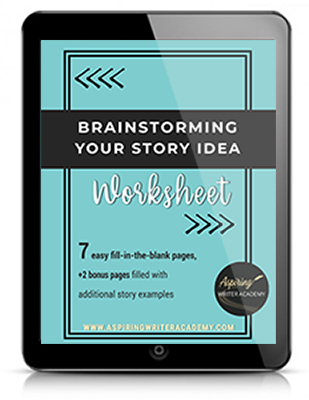
Before You Go… Grab This Free Resource!
If you’re in the early stages of writing your novel, don’t forget to download our free Brainstorming Your Story Idea Worksheet. It includes:
-
Fill-in-the-blank prompts
-
Story structure examples
-
Guided questions
-
Idea-boosting templates
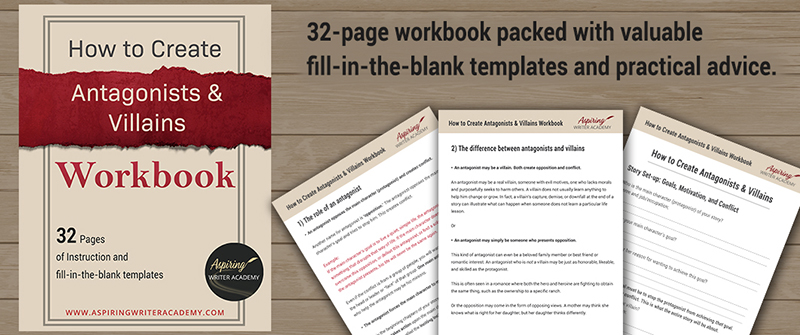
Do you find it difficult to create compelling antagonists and villains for your stories? Do your villains feel cartoonish and unbelievable? Do they lack motivation or a specific game plan? Discover the secrets to crafting villains that will stick with your readers long after they finish your story, with our How to Create Antagonists & Villains Workbook.
This 32-page instructional workbook is packed with valuable fill-in-the-blank templates and practical advice to help you create memorable and effective antagonists and villains. Whether you're a seasoned writer or just starting out, this workbook will take your writing to the next level.
Other Posts You May Like: