
How to Write a Novel When You Don’t Have Time

Do you dream of writing a novel but feel like there simply aren’t enough hours in the day?
Maybe you work a full-time job. Maybe you’re raising young children, caring for aging parents, managing a household, or juggling several responsibilities at once. By the time you finally have a moment to yourself, you’re exhausted—and your manuscript is still waiting for you.
So how do you find time to write when your schedule is already packed?
The good news is that you don’t necessarily need hours of uninterrupted writing time every day to make progress on your novel. With some planning, creativity, and a willingness to work in smaller blocks of time, you can keep moving your manuscript forward—even during a very busy season of life.

1. Find Ways to Buy Back Your Time
One of the biggest obstacles for busy writers isn't always a lack of motivation. Sometimes, it's simply a lack of available time.
If money is tight, look for ways to trade your time with someone else.
For example, parents might arrange a childcare swap with another family. You watch their children for a few hours one day, and they watch yours another day. You might also trade responsibilities such as school pickups, errands, or other household tasks.
The goal is to create a predictable block of uninterrupted writing time without necessarily spending more money.
Barter with yourself
You can also think of this as "bartering with yourself."
For example, prepare a double batch of meals one week and freeze half. The following week, you'll have meals ready to go, giving you more time to sit down and write.
You can also look at your budget and ask:
What am I currently spending money on that I could reduce or eliminate in exchange for more writing time?
Perhaps you could:
- Bring coffee or lunch from home instead of buying it.
- Reduce how often you eat at restaurants or order takeout.
- Cancel a subscription you rarely use.
- Have groceries delivered.
- Hire someone to clean your house or mow the lawn.
- Pay for a babysitter for a few hours.
- Outsource another household task that consistently takes up your limited free time.
You don't have to do all of these things. Even finding one small way to buy back a few hours each week can make a difference.
2. Schedule Your Writing Time
When you're busy, waiting for a large block of free time to magically appear may mean waiting a very long time.
Instead, put your writing on the calendar.
Treat your writing time like an appointment.
Depending on your schedule, that might mean:
Write before work
Could you wake up an hour earlier a few mornings a week?
You don't have to become a naturally enthusiastic morning person overnight. The first few minutes might not be glamorous. You might even spend five minutes complaining in your journal about how much you dislike getting up early!
But once you begin working on your manuscript, you may find it easier to get into the rhythm of writing.
Write after the kids go to bed
For some writers, evenings are more productive.
Once the children are asleep, the phones are quiet, and the day's interruptions have finally stopped, you may discover that even a short writing session can be surprisingly productive.
Use your lunch break
Your lunch break doesn't have to be long to be useful.
If you bring your lunch from home instead of spending time going to a restaurant, you may be able to use part of that break to work on your manuscript.
You could use a short break to:
- Write a paragraph
- Brainstorm a scene
- Develop a character
- Research something for your story
- Review what you wrote previously
- Make notes for your next chapter
- Outline a scene
- Solve a story problem
Not every writing session needs to involve producing hundreds of words.
Keep your manuscript with you
You never know when an unexpected pocket of time might appear.
A doctor's appointment might run late. You might arrive early for an appointment. You might have 20 minutes before picking up the kids.
Keep your manuscript, notes, or brainstorming materials accessible so you can use those unexpected moments.
Even a few minutes here and there can add up.
3. Don't Wait Until You Have Hours to Write
One of the most important lessons for busy writers is this:
You don't have to wait until you have several uninterrupted hours before you work on your novel.
If you only have 15 minutes, use 15 minutes.
If you only have 30 minutes, use 30 minutes.
If you can write one paragraph, write one paragraph.
It may not feel like much at the time, but consistent small efforts can move a manuscript forward.
You can also make those short sessions more productive by deciding ahead of time what you will work on.
Instead of sitting down and asking yourself, "What should I write today?" have a specific task waiting for you.
For example:
"During my lunch break, I'm going to write the argument between Sarah and Tom."
Or:
"Tonight, I'm going to brainstorm three possible endings for Chapter 8."
Having a specific goal makes it much easier to use a short amount of time effectively.
4. Create a Writing Routine That Fits Your Life
There isn't one perfect writing schedule for every author.
Some writers work best early in the morning. Others prefer late at night. Some can write every day, while others need to dedicate larger blocks of time to their manuscript on the weekends.
Your schedule may also change throughout your life.
Darlene experienced this firsthand. When her children were young, writing happened during nap time. Later, when she returned to work, she had to find a completely different way to fit writing into her life.
The important thing isn't creating the "perfect" schedule.
It's creating a schedule that you can realistically maintain.
Consider a weekend writing schedule
If weekdays are simply too packed, weekends may provide your best opportunity.
You could reserve a few hours on Saturday or Sunday morning for writing and then spend the rest of the day with your family.
Or perhaps one weekend day works better than the other.
The key is to put that writing time on your calendar and protect it.
5. Give Yourself a Specific Game Plan
When writing time is limited, you don't want to spend half of your precious writing session figuring out what you're supposed to do.
Having a game plan can help.
Before you finish a writing session, make a quick note about what you want to accomplish next time.
For example:
Next writing session:
- Finish Chapter 4
- Describe the setting for the restaurant scene
- Write the confrontation between the two characters
That way, when you have 30 minutes available tomorrow, you can sit down and start writing instead of spending those 30 minutes trying to figure out where to begin.
6. Use a Step-by-Step Writing Resource
If you're struggling to figure out what to work on next, a structured writing program or book can give you a helpful roadmap.
Darlene has personally used several resources that break the novel-writing process into smaller assignments.

Book in a Month by Victoria Lynn Schmidt
Despite the title, you don't necessarily have to finish an entire book in a month!
Darlene uses the worksheets, templates, and daily assignments as bite-sized writing exercises. Even if it takes six months or a year to work through the material, the assignments can provide a useful structure for moving your story forward.
The short exercises can also work well for writers who only have a limited amount of time each day.
The book can also help writers brainstorm their characters and develop a preliminary outline.

The Weekend Novelist by Robert J. Ray
This book is designed around the idea that writers with full-time jobs can use their weekends to work on their novels.
The book provides step-by-step assignments for each weekend.
And remember: you don't have to complete every assignment exactly according to the suggested schedule.
If one assignment takes you two or three weekends, that's okay.
The important thing is to keep moving forward.

The Weekend Novelist Writes a Mystery by Robert J. Ray and Jack Remick
Mystery writers may also want to check out The Weekend Novelist Writes a Mystery: From Empty Page to Finished Mystery in Just Fifty-Two Weekends.
As the title suggests, this book provides a structured, weekend-by-weekend approach specifically for writing a mystery.

Novelist Boot Camp by Todd A. Stone
Another resource Darlene has enjoyed is Novelist Boot Camp: 101 Ways to Take Your Book from Boring to Bestseller by Todd A. Stone.
This book uses short assignments and exercises designed to keep writers actively working on their stories.
If you enjoy a more energetic, motivational approach to writing, this type of structured exercise may be a good fit.
You Can Write a Novel—Even When Life Is Busy
Writing a novel while working full-time, raising children, or managing other responsibilities isn't easy.
But you don't have to wait for life to become less busy before you begin.
Look for the small pockets of time that already exist. Create new blocks of time when you can. Trade responsibilities with others. Outsource tasks when your budget allows. Schedule your writing like an appointment. And most importantly, keep moving forward, even if you can only take small steps.
You might not write an entire chapter in one sitting.
You might not even write an entire page.
But one paragraph today is still progress.
One scene this weekend is still progress.
One small writing session at a time, you can move closer to that finished manuscript.
We Believe All Authors Can Aspire to Take Their Writing to the Next Level!
Our Goal for Aspiring Writer Academy is to help people learn how to write quality fiction, teach them to publish and promote their work, and to give them the necessary tools to pursue a writing career.
Before You Go… Grab This Free Resource!
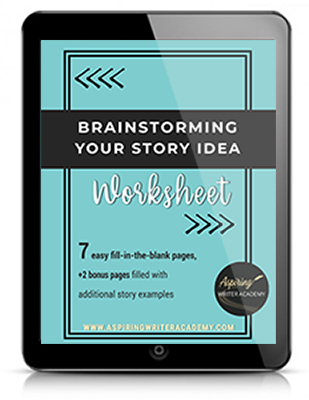
If you’re in the early stages of writing your novel, don’t forget to download our free Brainstorming Your Story Idea Worksheet. It includes:
-
Fill-in-the-blank prompts
-
Story structure examples
-
Guided questions
-
Idea-boosting templates
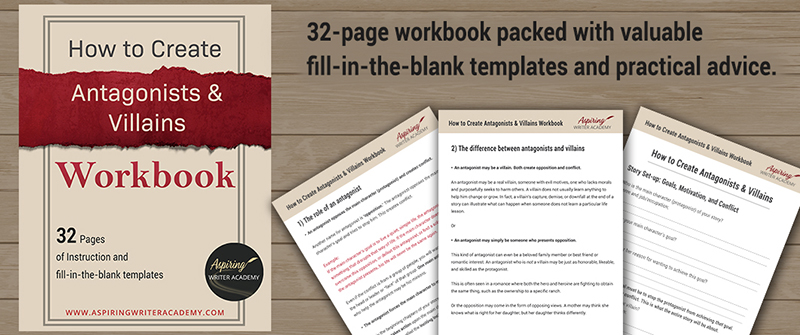
Do you find it difficult to create compelling antagonists and villains for your stories? Do your villains feel cartoonish and unbelievable? Do they lack motivation or a specific game plan? Discover the secrets to crafting villains that will stick with your readers long after they finish your story, with our How to Create Antagonists & Villains Workbook.
This 32-page instructional workbook is packed with valuable fill-in-the-blank templates and practical advice to help you create memorable and effective antagonists and villains. Whether you're a seasoned writer or just starting out, this workbook will take your writing to the next level.
Other Posts You May Like: