
How to Pace Your Novel (Keep Readers Hooked Until the End)

Have you ever started reading a novel that grabbed your attention immediately… only to lose interest halfway through?
Or maybe you've reached the ending of a book and thought, That was it?
In many cases, both of these problems come down to one thing: story pacing.
Learning how to pace your novel is one of the most important skills you can develop as a writer. Great pacing keeps readers emotionally invested, eager to turn the page, and excited to discover what happens next. Poor pacing can make even an excellent story feel slow, rushed, or unsatisfying.

What Is Story Pacing?
Story pacing refers to the speed at which your story unfolds.
It isn't about making your novel fast from beginning to end. Instead, good pacing is about controlling the reader's emotional experience. Some scenes need to move quickly to create excitement and urgency, while others need to slow down to give readers time to absorb important events or connect emotionally with your characters.
Think of pacing like music. A song that stays loud and fast the entire time becomes exhausting. A song that's slow from beginning to end can become repetitive. Great stories alternate between moments of tension and moments of reflection.
Why Story Pacing Matters
Strong pacing keeps readers engaged because it constantly gives them a reason to continue.
Poor pacing often creates one of two problems:
- The story moves too slowly and readers become bored.
- The story moves too quickly and important moments don't have enough emotional impact.
Your goal isn't to write the fastest story possible.
Your goal is to write the most emotionally satisfying story possible.
Study Pacing in Books You Love
One of the fastest ways to improve your own pacing is to study successful novels.
As you read, ask yourself:
- When does the author slow the story down?
- When do scenes speed up?
- How long are action scenes?
- How much dialogue is used?
- When do chapters end?
- Why do you keep turning the page?
Reading like a writer helps you recognize pacing techniques you can apply in your own work.
When Should You Slow Down?
Many writers worry that slowing down will make readers lose interest.
In reality, slowing down often creates some of the most memorable moments in a novel—when it's done intentionally.
Consider slowing the pace when:
- Your character has just survived an intense action scene.
- They must make a life-changing decision.
- An important relationship changes.
- A major plot twist needs emotional processing.
- Your character experiences grief, joy, fear, or loss.
These quieter scenes allow readers to connect emotionally with your characters.
Bonus Tip
Slowing the pace doesn't mean stopping the story.
Even reflective scenes should accomplish at least one purpose:
- Reveal new information
- Increase the stakes
- Develop the character
- Move the plot forward
If nothing changes by the end of the scene, it probably needs revision.
When Should You Speed Up?
Fast pacing works best during moments of conflict and urgency.
Examples include:
- Fight scenes
- Chase scenes
- Heated arguments
- Escapes
- Major discoveries
- Dangerous situations
One of the easiest ways to create faster pacing is by simplifying your writing.
Instead of long paragraphs filled with explanation, allow action and dialogue to carry the scene.
Shorter sentences naturally create a quicker rhythm that readers subconsciously feel.
How to Avoid the Saggy Middle
Many novels lose momentum around the midpoint.
The opening is exciting.
The climax is exciting.
But the middle often feels like characters are simply wandering around waiting for the ending.
One effective solution is to create a meaningful "mini-story" within your novel.
This smaller sequence should have:
- Its own goal
- Obstacles
- Conflict
- Resolution
Most importantly, it should permanently change something.
When the sequence ends, your characters shouldn't be exactly where they started—emotionally or physically.
Building Toward an Unforgettable Climax
As your novel progresses, the pressure on your protagonist should steadily increase.
Ask yourself:
- Are the stakes getting higher?
- Are the obstacles becoming more difficult?
- Is the protagonist running out of options?
The climax should feel inevitable because every scene leading up to it has increased the tension.
And while the climax should move quickly, it should never feel rushed.
Readers have invested an entire novel in reaching this moment.
Let it deliver.
7 Ways to Improve Your Story's Pacing
1. Enter Late and Leave Early
Skip unnecessary setup.
Begin scenes as close to the conflict as possible and leave once the scene has accomplished its purpose.
2. Use Shorter Sentences
Short sentences create urgency.
Long, flowing sentences naturally slow the pace.
Use both intentionally.
3. Break Up Long Paragraphs
Large blocks of text feel slower.
White space encourages readers to keep moving.
Don't be afraid to let an important sentence stand on its own.
4. Add a Ticking Clock
Deadlines create tension.
Whether your character has one hour or one week, time pressure encourages readers to keep turning pages.
5. Switch Scenes Strategically
Ending a chapter at a tense moment before shifting to another storyline can build suspense.
Just avoid overusing this technique, or readers may become frustrated.
6. Keep Exposition Brief
Lengthy backstory slows momentum.
During fast scenes, include only what readers need to understand what's happening.
Save deeper explanations for quieter moments.
7. End Scenes with Questions
Every scene should leave readers wondering:
What happens next?
That question is one of the strongest forces driving readers through your novel.
Bonus Tips for Better Story Pacing
Here are a few additional ways to strengthen your pacing:
- Read your dialogue out loud to identify slow sections.
- Vary chapter lengths depending on the intensity of the story.
- Remove repeated information that readers already understand.
- End chapters with a new complication whenever possible.
- During revisions, ask whether every scene changes something.
If the answer is no, consider combining the scene with another or cutting it entirely.
Final Thoughts
Mastering pacing isn't about making your novel faster.
It's about knowing when to let your story breathe and when to tighten the tension.
The best novels balance action with reflection, conflict with recovery, and suspense with emotional payoff.
As you revise your manuscript, ask yourself one simple question after every scene:
Does this scene move the character, the conflict, or the story forward?
If the answer is yes, you're creating the momentum that keeps readers hooked until the very last page.
We Believe All Authors Can Aspire to Take Their Writing to the Next Level!
Our Goal for Aspiring Writer Academy is to help people learn how to write quality fiction, teach them to publish and promote their work, and to give them the necessary tools to pursue a writing career.
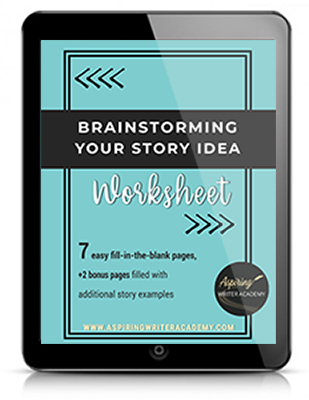
Before You Go… Grab This Free Resource!
If you’re in the early stages of writing your novel, don’t forget to download our free Brainstorming Your Story Idea Worksheet. It includes:
-
Fill-in-the-blank prompts
-
Story structure examples
-
Guided questions
-
Idea-boosting templates
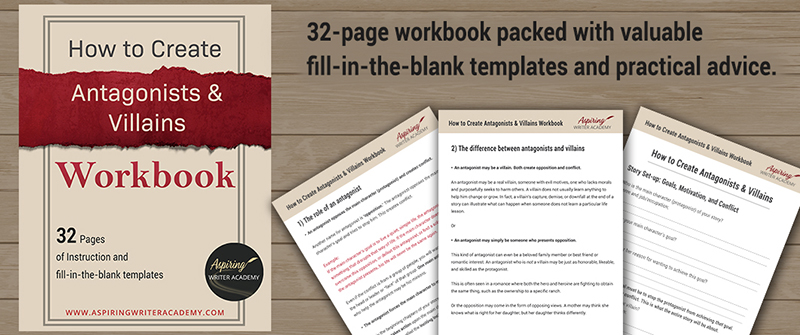
Do you find it difficult to create compelling antagonists and villains for your stories? Do your villains feel cartoonish and unbelievable? Do they lack motivation or a specific game plan? Discover the secrets to crafting villains that will stick with your readers long after they finish your story, with our How to Create Antagonists & Villains Workbook.
This 32-page instructional workbook is packed with valuable fill-in-the-blank templates and practical advice to help you create memorable and effective antagonists and villains. Whether you're a seasoned writer or just starting out, this workbook will take your writing to the next level.
Other Posts You May Like: