Three Act Structure: How to Write Act Three With a Climax Readers Will Remember
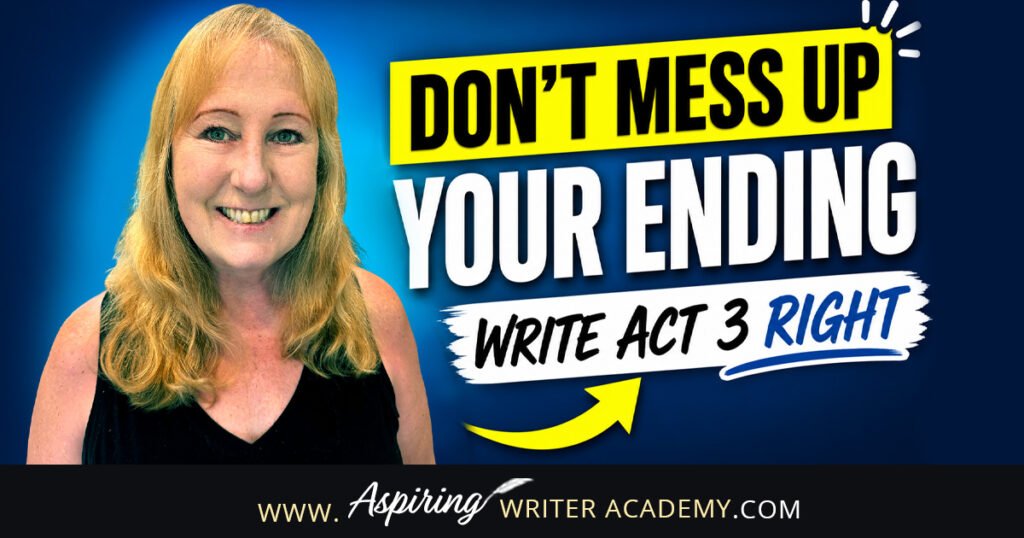
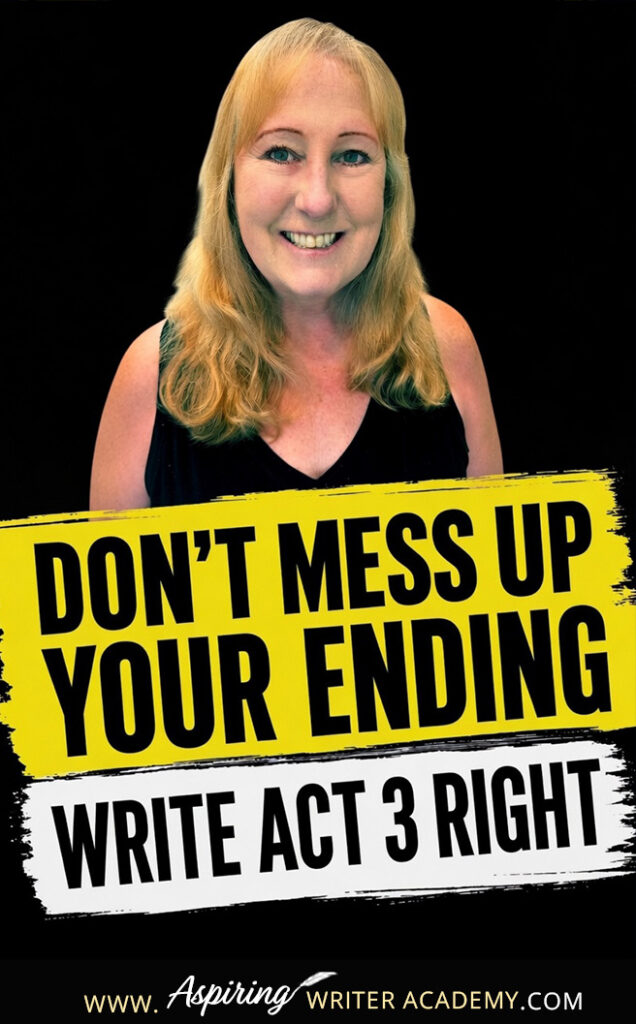
If Act 1 sets up your story and Act 2 raises the tension, then Act 3 is where everything finally pays off.
This is the part of your novel readers have been waiting for. It contains the climax, the final confrontation, the emotional payoff, and the resolution to the story problem you introduced at the beginning of your book.
But many writers struggle with Act 3.
Some endings feel rushed. Others drag on too long. Sometimes the climax falls flat because the protagonist doesn’t truly earn the victory. And sometimes the ending resolves the conflict without delivering the emotional impact readers were hoping for.
So how do you write an ending that feels satisfying?
Let’s break down Act 3 of the three act structure step by step.

What Is Act 3 in the Three Act Structure?
In the three act structure:
- Act 1 introduces the protagonist, conflict, and story goal.
- Act 2 escalates tension and pushes the protagonist through challenges and setbacks.
- Act 3 contains the climax and resolution of the story.
Act 3 is where your protagonist makes one final attempt to achieve their goal. They face the opposition directly, prove how they’ve changed, and bring the story to its conclusion.
A strong Act 3 typically includes five major beats:
- Revelation
- Decision and regrouping
- Climax
- Resolution
- Final image
Let’s look at each one.
1. Revelation: New Information Changes Everything
At the end of Act 2, everything usually falls apart.
Your protagonist may feel defeated, alone, or convinced they’ve failed. This is often called the “dark night of the soul” moment in story structure.
Then something changes.
A new piece of information is revealed. The protagonist realizes a hidden truth, uncovers a weakness, or finally understands what must be done.
This revelation gives the protagonist renewed direction and hope.
Examples of Revelation Moments
In the movie The Sixth Sense, the protagonist realizes the truth about his own condition, completely reframing the story.
In Frozen, Elsa’s understanding of herself and her powers changes.
In The Lion King, Simba learns the truth about his past and realizes he must return home.
In Harry Potter and the Deathly Hallows – Part 2, Harry finally understands what must be done to defeat Voldemort.
The revelation should feel connected to everything that came before it. It should not appear randomly just to move the plot forward.
2. Decision and Regathering of the Team
After the revelation, the protagonist makes a choice.
They decide to try again.
This is the moment where they stop reacting and start acting with purpose.
The protagonist may gather allies, tools, information, or courage before heading into the climax.
This section often creates a calm-before-the-storm feeling.
Examples
In Ocean's Eleven, the team regroups and prepares for the final casino heist.
In Toy Story 3, the toys come together for one final escape attempt.
In Avengers: Endgame, the Avengers reunite and form a plan to undo the destruction caused by Thanos.
This section helps build anticipation for the climax while showing the protagonist’s renewed determination.
3. The Climax: The Most Important Scene in Your Story
The climax is the emotional and dramatic peak of your story.
Everything has been building toward this moment.
This is where the protagonist faces the antagonist or central conflict directly.
A strong climax is not just physical. It’s emotional and internal too.
The protagonist must prove they’ve changed.
They must overcome the flaw, fear, or weakness that held them back throughout the story.
What Makes a Great Climax?
A powerful climax usually includes:
- High emotional stakes
- Difficult choices
- Unexpected complications
- Strong sensory details
- Character growth
- Consequences
The ending should never feel too easy.
Readers want to see the protagonist struggle, sacrifice, and earn the victory.
Examples of Strong Climaxes
In Return of the Jedi, Luke confronts Darth Vader and the Emperor. The conflict is physical, emotional, and deeply personal.
In Titanic, Jack and Rose struggle to survive while their relationship is tested under impossible circumstances.
In The Dark Knight, Batman faces impossible moral choices while Gotham descends into chaos.
Avoid the “Miracle Rescue” Ending
One common mistake writers make is introducing a sudden outside force that saves the protagonist at the last second.
This is often called a deus ex machina ending.
Readers want the protagonist to solve the problem using the lessons, strengths, and growth developed throughout the story.
Side characters can help, but the protagonist’s choices should drive the final outcome.
Don’t Rush the Climax
Another mistake writers make is rushing through the most important scene in the book.
Slow down.
Let readers experience the moment fully.
Use sensory details. Show emotions. Allow tension to build. Help readers visualize the action and feel the emotional weight of what’s happening.
This is the payoff readers have been waiting for.
4. Resolution: Showing the Consequences
After the climax, readers need emotional closure.
The resolution reveals the aftermath of the story’s events and answers the remaining questions.
What changed?
Did the protagonist succeed or fail?
How were the side characters affected?
What does life look like now?
This section ties up loose ends and allows readers to emotionally process the ending.
Examples of Resolution Scenes
In Pride and Prejudice, Elizabeth and Darcy overcome misunderstanding and social barriers to finally come together.
In Titanic, Rose survives, leaves her old life behind, and begins a new future on her own terms.
In Forrest Gump, Forrest reflects on his life and how everything has come full circle.
If you plan to write a sequel, you can leave a small thread open. But the main conflict should still feel complete and satisfying.
5. The Final Scene: The Last Image Readers Remember
The final scene is your story’s lasting impression.
It’s the final emotional note readers leave with.
This scene often reflects the protagonist’s transformation and reinforces the theme of the story.
Examples of Memorable Final Scenes
In Moana, Moana reunites with her family as her people return to voyaging beyond the reef.
In Inception, the spinning top leaves audiences questioning reality.
In La La Land, the ending reflects both love and loss in a bittersweet emotional conclusion.
In Cast Away, the protagonist stands at a crossroads, symbolizing uncertainty and renewal.
Your final scene answers an important question:
What did this journey mean?
A Great Ending Often Mirrors the Beginning
Many memorable stories come full circle.
The ending mirrors the beginning in some way, but now everything carries new meaning because the protagonist has changed.
This could include:
- A repeated line of dialogue
- A familiar setting
- A similar situation
- A symbolic image
- A repeated object or action
In the romantic comedy Leap Year, the ending mirrors an earlier road trip scene, but now the relationship has changed completely.
This technique creates emotional satisfaction and helps the story feel complete.
The Five Key Beats of Act 3
Let’s review the five major components of Act 3:
- Revelation
- Decision and regrouping
- Climax
- Resolution
- Final image
If you structure your ending around these five beats, your story won’t just stop — it will feel meaningful and emotionally satisfying.
And that’s what readers remember.
Final Thoughts
Act 3 is where your story delivers on its promises.
Readers want to see the protagonist tested one final time. They want emotional payoff, meaningful change, and a conclusion that feels earned.
So when writing your ending, ask yourself:
- Has my protagonist truly changed?
- Does the climax feel earned?
- Did I give readers emotional closure?
- Does the ending connect back to the beginning?
- Will readers remember the final scene?
If the answer is yes, you’re on the right track.
And if you’re struggling with your novel’s ending, try looking back at your beginning. Often the clues to a satisfying ending were there all along.
We Believe All Authors Can Aspire to Take Their Writing to the Next Level!
Our Goal for Aspiring Writer Academy is to help people learn how to write quality fiction, teach them to publish and promote their work, and to give them the necessary tools to pursue a writing career.
Before You Go… Grab This Free Resource!
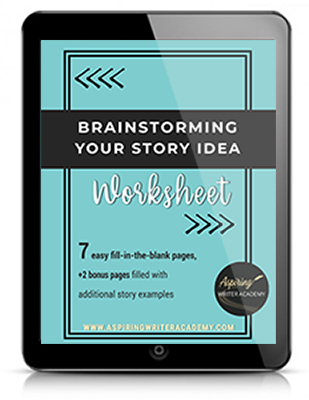
If you’re in the early stages of writing your novel, don’t forget to download our free Brainstorming Your Story Idea Worksheet. It includes:
-
Fill-in-the-blank prompts
-
Story structure examples
-
Guided questions
-
Idea-boosting templates
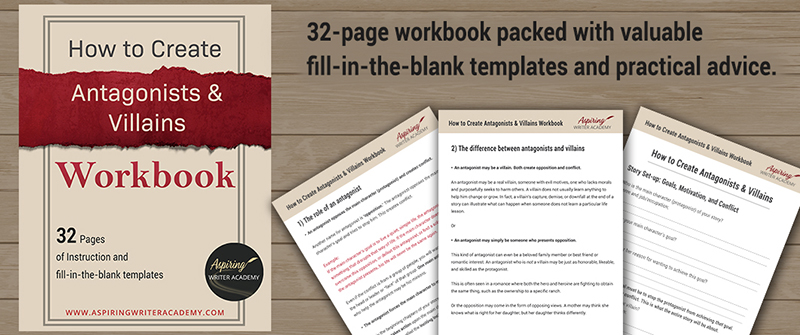
Do you find it difficult to create compelling antagonists and villains for your stories? Do your villains feel cartoonish and unbelievable? Do they lack motivation or a specific game plan? Discover the secrets to crafting villains that will stick with your readers long after they finish your story, with our How to Create Antagonists & Villains Workbook.
This 32-page instructional workbook is packed with valuable fill-in-the-blank templates and practical advice to help you create memorable and effective antagonists and villains. Whether you're a seasoned writer or just starting out, this workbook will take your writing to the next level.
Other Posts You May Like: