Stuck On Your Story? Try the “15 Things That Could Happen” Brainstorming Method
Have you ever been happily writing your story… and then suddenly hit a wall?
You reach a scene where you don’t know what happens next.
The momentum disappears.
Indecision creeps in.
And before long, anxiety starts whispering:
What if I’ve written myself into a corner?
If this sounds familiar — you’re not alone. Every fiction writer experiences this at some point.
The good news? There’s a simple brainstorming exercise that can help you move forward again.
It’s called the “15 Things That Could Happen” method, and it’s one of the easiest ways to unlock fresh story ideas when you feel stuck.

Why Writers Get Stuck in the First Place
Getting stuck usually doesn’t mean your story is broken.
More often, it means your brain is trying to choose between too few options.
When we only consider one or two logical next steps, writing starts to feel forced or boring. We sense the scene lacks excitement, but we don’t yet know how to fix it.
Creativity thrives on options — and that’s exactly what this exercise creates.
Step 1: Step Away From the Screen
When you feel stuck, stop typing.
Close your laptop.
Instead, grab a pen and paper.
There’s something powerful about the physical motion of handwriting. Writing by hand engages your brain differently and often helps ideas flow more freely than staring at a blinking cursor.
If your mind feels tense, take a short walk, doodle on the page, or simply pause for a few moments. Sometimes clarity arrives while doing ordinary things like driving, showering, or working in the garden.
Then begin brainstorming.
Step 2: Write Down 15 Possible Things That Could Happen
At the top of your paper, write:
“What could happen next?”
Now list at least 15 possibilities.
Yes — fifteen.
You can even push it to twenty if you want an extra creativity boost.
The goal is not perfection. The goal is quantity.
Step 3: Expect the First Ideas to Be Obvious
Here’s an important part of the process:
The first few ideas probably won’t be amazing.
Your first five ideas are often:
-
Logical
-
Predictable
-
Ideas you’ve already considered
That’s completely normal.
Keep going anyway.
As you move further down the list, your brain runs out of easy answers — and that’s when creativity begins to wake up.
Around ideas 8–15, writers often discover:
-
unexpected twists
-
deeper conflict
-
more emotional stakes
-
surprising character decisions
This is where the magic happens.
Step 4: Ask Better “What If” Questions
If you get stuck while brainstorming, try asking questions like:
-
What’s the worst thing that could happen right now?
-
What would make this moment harder for my character?
-
What if a new character entered the scene?
-
What if the setting suddenly changed?
-
What dilemma could force my character to choose between two difficult options?
-
What would the reader never expect?
You’re not committing to any idea yet — you’re simply exploring possibilities.
Step 5: Choose the Most Interesting Option (Not the Safest One)
Once your list is complete, read through all your ideas.
Look for the option that:
-
creates tension
-
raises stakes
-
reveals character
-
or makes you curious to keep writing
Often the best choice isn’t the most logical one — it’s the one that creates the most story energy.
If an idea excites you, chances are it will excite your readers too.
Why This Method Works
The “15 Things” exercise works because it removes pressure.
Instead of trying to find the perfect answer, you give yourself permission to explore many answers.
This shifts your mindset from:
 “I have to get this right”
to “Let’s see what’s possible.”
And creativity loves possibility.
A Gentle Reminder for Writers
Every writer gets stuck.
Hitting a pause in your story isn’t failure — it’s often a sign that your story is asking for something deeper, more surprising, or more meaningful.
Sometimes all you need is space, a piece of paper, and a long enough list to move past the obvious ideas.
So the next time your story stalls, try this:
Turn off your laptop.
Pick up a pen.
And write down 15 things that could happen next.
You might be surprised by where your story leads you.
We Believe All Authors Can Aspire to Take Their Writing to the Next Level!
Our Goal for Aspiring Writer Academy is to help people learn how to write quality fiction, teach them to publish and promote their work, and to give them the necessary tools to pursue a writing career.
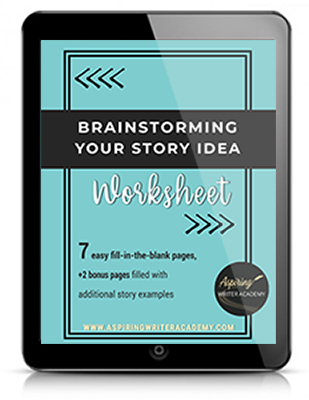
Before You Go… Grab This Free Resource!
If you’re in the early stages of writing your novel, don’t forget to download our free Brainstorming Your Story Idea Worksheet. It includes:
-
Fill-in-the-blank prompts
-
Story structure examples
-
Guided questions
-
Idea-boosting templates
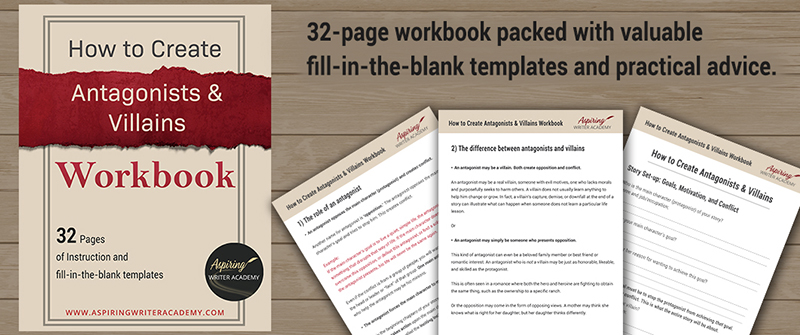
Do you find it difficult to create compelling antagonists and villains for your stories? Do your villains feel cartoonish and unbelievable? Do they lack motivation or a specific game plan? Discover the secrets to crafting villains that will stick with your readers long after they finish your story, with our How to Create Antagonists & Villains Workbook.
This 32-page instructional workbook is packed with valuable fill-in-the-blank templates and practical advice to help you create memorable and effective antagonists and villains. Whether you're a seasoned writer or just starting out, this workbook will take your writing to the next level.
Other Posts You May Like: