
3 Steps: How to Create Fictional Characters with More Depth






Are you struggling to craft fictional characters that truly captivate your readers? Do some of your characters come across as “flat” or ordinary? How do you decide on their daily habits or explore their backstory? In what ways do other characters shape your protagonist’s growth?
In 3 Steps: How to Create Fictional Characters with More Depth, we help you go deeper into your characters' development, background, timeline, and family history, so you can bring them to life in your fictional novel.
Follow along as we discuss the following:
1) Character Bio
2) Daily Life Journal Entry
3) Backstory Timeline & Influential Relationships

The most important thing to remember when creating characters, or choosing a setting, or when deciding upon other components for your novel, is that no one part is separate from the rest. Like all the parts of a functioning body, all the parts of your novel must work together.
For example, the author should not just randomly give a character a particular strength or weakness or unique habit just because they feel like it but because it will affect the story by becoming useful in the plot.
(Or if you do choose to create a random character, then the author will need to create a plot that fits, challenges, and affects that particular character with those random traits.)
Complete the 3 steps below while also keeping your story idea at the forefront of your mind.

1) Character Bio
The first step to create a fictional character with more depth is to write a character bio. Imagine how you would describe someone to your best friend in one paragraph.
Which key descriptive words would you choose?
Is he an arrogant dentist? A philosophical soccer player? A cunning manipulator?
- It’s often easier to create a visual image for your reader if you use an adjective followed by the character’s profession or main personality trait.
What is the first impression this character makes (when he or she walks into a room)?
- What does this character look like?
- How do they talk or walk or move about the room?
- What quirks or unusual habits do you observe?
- What is this character good at? (strength)
- And what bad habit or unfavorable personality trait does the character need to overcome? (flaw, weakness)
Example:
Stephanie MacDonald is a pretty, 28-year-old horse trainer with blonde hair and blue eyes who deeply cares for her family and their Colorado ranch. She loves animals, including the stray barn cat and the family dog. She is good at photography, graphic design, and computer tech, which she is determined to use to grow her ranch website. She needs to bring in more clients and money to support the ranch and pay off an oppressive past debt. She’s been in love once, only to have her heart broken and although she dates, she hasn’t yet met anyone new who holds her interest. Potential suitors find her guarded and distrusting – she tends to make snap judgments about people to protect herself from getting hurt again. If she’s feeling anxious, she has an unconscious habit of patting her wrist, the way her mother used to soothe her long ago. And although she can be quite social, she is more of an introvert who also likes to read books.
Many authors flip through a “Sun Signs” or “Astrology” or “Relationship Compatibility” book where they already have many character personality bios ready to go complete with what types of jobs and romantic partners this type of person may have. This is great for authors who start with a character and then build their plots around this information.
But if you need a character whose traits will fit your already preconceived story idea, then you can start with a prefabricated bio from one of these books, then change or tweak some of the information to better suit the plot.
Word of Caution: I would highly recommend you write your own character’s bios instead of relying too heavily on those prefabricated in these books, but if you are at loss for inspiration, it can be a good starting point to help you brainstorm ideas.
Once you are satisfied with all the information you’ve gathered on your character’s physical description, personality, habits & traits, goals, wants, and desires, strengths and flaws or weaknesses, try to condense it all into one single short paragraph. Concise word choice matters. Only include key descriptors and not an entire encyclopedia about your character.
What are the most important things we need to know about this character in your story?
Which key descriptors paint the most vivid picture?



2) Daily Life Journal Entry
Now let’s bring the character bio to life. In your character’s POV (point of view) write 2- or 3-pages journaling one day in their ordinary life. Like a diary entry.
- What time does the character get up in the morning? Does he jump right up or hit the snooze button for another ten minutes?
- What is his morning routine? What does he or she wear today and why? What does the character eat for breakfast?
- Does your character go to work, or to school, or to a community function? How does the character get there? What kind of car does he drive? Or does she take the bus or a train or ride a bicycle? How does your character feel about this mode of transportation or the traffic that day?
- Who did this character see or meet today? Who are his friends, his coworkers, boss, or neighbors? Who are his family members? Does he have pets?
- How can you quickly show in action this character’s strength (a good, favorable, likeable trait or skill) while interacting with another person?
- Likewise, what happened to this character today that revealed their flaws or weaknesses? Who witnessed this? How does the character feel about it?
- What did the character have for lunch or dinner? Does he have good table manners? How does she sit in a chair?
- What did your character want to do today? Did he accomplish his goal?
- What did your character do for relaxation or fun? Any hobbies?
- Does she read or watch TV at night? Or listen to music? What kind?
- Was this a good day or a bad day for your character?
- Most importantly, let the character rant, vent, and reveal his or her emotion each step of the way! Give a detailed account of what this character is thinking and feeling!
This may seem like a silly exercise, but if you take the time to actually do it, you will get to know your characters on a much deeper level. Ideas that you have never thought of before will spring forward. You might even insert some parts of this journal entry into your story.
You may also find that you need to change a character trait or two that doesn’t exactly fit your character or the story.
3) Backstory Timeline & Influential Relationships
Next, create a timeline from the character’s birth to their present age.
- Which historical events took place during the character’s lifetime that may have influenced him in some way? Or at the very least, what events should your character be aware of? Mark the year on a timeline scroll.
- When did your character start school? Or graduate high school or college? When did he get his first job or engage in a sport or learn a new hobby?
- When did she attend her first dance, go on her first date, have her first kiss?
- What was their first wound where he or she was deeply hurt (emotionally)? Who inflicted this wound? What year? Is the character still carrying invisible scars from this past experience? How has this influenced your character going forward?
- At what age did your character have someone they knew die? At what age did he or she meet a new friend or mentor or meet someone who changed their life?
- Considering your plot, what else in your character’s background influenced how he acts or who he is in the current story? How can events of the past rise up to haunt your character in the present story? Do the events of the plot force the character to face and deal with a flaw he didn’t even know he had?
Also create a list of the character’s family members, close friends, and perhaps even an influential rival or dreaded enemy. Who are they?
- List each person’s name followed by a 1-2 sentence brief description.
- How have they influenced your main character?
- What is their relationship like? How does the main character feel about this person in his life?
- What influential roles will these other characters fulfill in the story? How will they support or hinder your main character?
- How did the character’s grandparents’ views influence his parents’ views and now perhaps his own? How else did past generations affect your character? Are there any special traditions that have been passed down?
After completing all 3 steps, you should know your character on a much deeper level than you did before.
With the character’s bio, daily journal entry, timeline, and influential relationships by your side, you can go ahead and write your story without hesitation because you will already know how the character will react in a certain situation.
Your thoughtfully created character will delight readers with their quirks, habits, skills, and flaws that must be overcome. And most importantly, you should have created a character that best suits the plot and enhances your initial story idea.
We hope you have enjoyed 3 Steps: How to Create Fictional Characters with More Depth and that you have gained some valuable tips to help you dive deeper into the development, background, and family history of your characters for your fictional novel.
If you have any questions or would like to leave a comment below, we would love to hear from you!
Pin on Pinterest

We Believe All Authors Can Aspire to Take Their Writing to the Next Level!
Our Goal for Aspiring Writer Academy is to help people learn how to write quality fiction, teach them to publish and promote their work, and to give them the necessary tools to pursue a writing career.
If you like more help developing your story, you may wish to download our Free Brainstorming Your Story Idea Worksheet

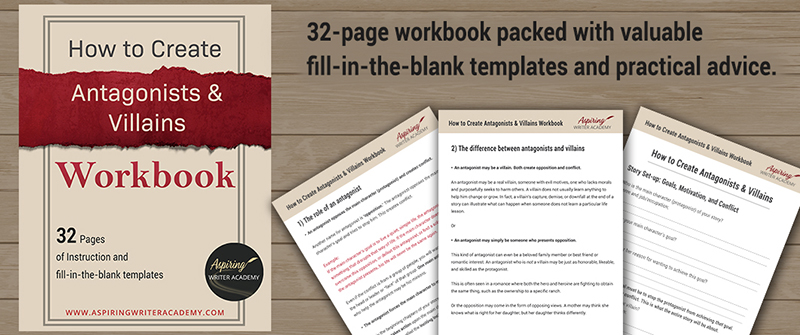
Do you find it difficult to create compelling antagonists and villains for your stories? Do your villains feel cartoonish and unbelievable? Do they lack motivation or a specific game plan? Discover the secrets to crafting villains that will stick with your readers long after they finish your story, with our How to Create Antagonists & Villains Workbook.
This 32-page instructional workbook is packed with valuable fill-in-the-blank templates and practical advice to help you create memorable and effective antagonists and villains. Whether you're a seasoned writer or just starting out, this workbook will take your writing to the next level.
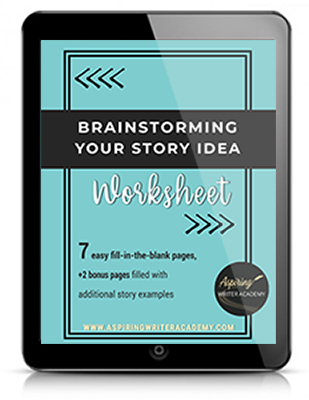
ENTER YOUR EMAIL BELOW
TO GET YOUR FREE
"Brainstorming Your Story Idea Worksheet"
7 easy fill-in-the-blank pages,
+ 2 bonus pages filled with additional story examples.
A valuable tool to develop story plots again and again.
Other Blog Posts You May Like
How to Create a Basic Outline of a Fictional Novel with Characters, Plot, and Setting in One
How to Create ‘Rising Conflict’ in Your Fiction Novel
Fiction Writing: How to Make Your Character’s Unique
How to Use Framing Techniques in Your Fictional Novel
Fiction Writing: Create Character Profiles (with Free Questionnaire)
How to Create a Fictional Character in 5 Steps
Fiction Writing: What is the ‘Man in the Mirror Moment?’
How to Create a Diverse Cast of Characters for Your Fictional Novel
Write Your First Novel: How Do You Start?
Fiction Writing: What is a Character Arc?
How to Create Antagonists Who Are Not Villains
How to Create the Protagonist for Your Fictional Story
How to Choose Characters to Populate Your Fictional Story
Fiction Writing: How to Plot a Story where the Antagonist is an ‘Invisible Foe’
Creative Writing: 5 Ways to Strengthen a Weak Fictional Character
Fiction Writing: How to Write Compelling Dialogue
5 Questions to Create Believable Villains
Why Your Characters Need Story-Worthy Goals









Oh, my gosh! This post is encouraging for me because when I began my (nearly abandoned novel series), I created for each major and supporting character, a series of charts: character bio, health-issues, personality traits, story activities, settings/landmarks, story timeline & events (including family & event prehistory), character description, ‘words they use’, and more.
So, I have a fairly good grasp of the key characters, but what fails me is when and where to begin the story? I want my book story to be based in Devonshire, but I don’t know where to get affordable 18th century information for the region, regarding lifestyle, appearances, dialect, concerns of the day, newspapers, etc.
I decided on staying close to home and relocated the story to Germantown in Philadelphia, PA. Turns out that most of my characters have German names–how did that happen?!!–so Germantown seems a good fit. But they do have ties to Britain.
Then there is my confusion of whether to begin the (3 or 4 book series) during the Main Character’s late childhood (basically backstory that will relate key events which formed the character’s notoriety) OR is it more sensible to begin the story in adulthood (early 30s) and add brief bits of backstory through plot and character thoughts, interactions and dialogue?
This comment is waaay longer than I meant for it to be, but I hope you will take pity on me and help lend clarity to at least the paragraph above. I really want to reconnect with my characters and complete at least one of the books. These characters feel so real to me that I wonder if they were people I interacted with in a past life.
Thank you in advance!
Hi Penny! First off, thank you so much for sharing all of this—your enthusiasm for your characters shines through, and it’s clear you’ve already done a ton of thoughtful work. I love that you’ve created such detailed charts and backstory for each one—it sounds like your cast is incredibly well-developed and ready to leap onto the page!
As for where to start the story: you’re not alone in this struggle. A good rule of thumb is to begin as late in the character’s journey as possible, at a moment of change or tension—when the real story kicks off. So, starting in adulthood and weaving in the childhood backstory through memories, dialogue, or key flashbacks can often work better pacing-wise, especially for historical fiction. That way, readers stay grounded in the forward motion of the plot while still getting the important formative pieces from the past.
The key point to remember is to focus on the current story you plan to tell. What is the inciting incident that sets the current story in motion? What turns your character’s ordinary world upside down? Backstory and childhood wounds should all be woven into the story later, once the current story gets rolling. Even with a 3 to 4 book series. If you need help plotting with story structure check out this post with free templates. https://www.aspiringwriteracademy.com/how-to-plot-your-fictional-novel-with-free-template-included/
That said, if something truly compelling happens in childhood—something that sets the entire series in motion—you could consider starting there as a prologue or Part 1 before jumping forward in time. It all depends on what creates the most emotional pull for readers right out of the gate.
Also, Germantown sounds like a great setting—especially with your characters’ German heritage! And don’t feel bad about moving the story location. Sometimes the best stories happen when we shift gears and write what we can research and relate to more easily. Local history museums, city archives, and even old newspapers online (like Chronicling America) can offer gems for period details if you ever decide to revisit Devonshire in another project.
I truly hope you reconnect with your characters—they sound worth it! You’ve done the hard part already: bringing them to life. Now it’s just about finding the best way to share their story with the world. You’ve got this 💛