How to Find Great Story Ideas for Your Fictional Novel

As a writer, inspiration for compelling stories can be found all around you—if you know where to look. The world is teeming with ideas just waiting to be discovered. Whether it’s news stories, your favorite hobbies, personal experiences, or even places you’ve traveled, there are endless sources of inspiration right at your fingertips.
In How to Find Great Story Ideas for Your Fictional Novel, we show you how to discover ideas that ignite your creativity and keep your writing inspired.

1. Where to Look for Story Ideas
Story Ideas are all around you.
You can look for them in:
- TV shows / movies / other books
- Research
- Travel pamphlets
- Pinterest / YouTube
- Newspapers / magazines / local or world news
- Town folklore
- Personal histories
- Historical places & biographies
- Situations or true stories told to you by a friend
- Incidents that you have encountered or witnessed
What pieces of information spark your interest? What makes you lean in and want to learn more? Perhaps it is just one part of an idea or inspiration for just one scene in your novel. How can you combine this initial spark with another idea to make it more interesting? Or how can you twist the idea around by changing who was involved, their age, their gender, or the setting?
2. List Hobbies, Passions, and Topics You Enjoy
When searching for a topic for a new fictional story, first make a few lists of all the things that you like or find fascinating.
Discover what interests you. Because you are going to be working on this project for a long time. You will want to find a topic that you are interested in writing about day after day, week after week.
Think about what intrigues you, such as:
- Specific hobbies
- Sports
- Collectibles / antiques
- Hiking / fishing
- Science fiction
- Medieval battles
- Courtroom drama
- Cowboys / Vikings
- Cats / dogs / horses
- Sewing / quilting
- Unique settings
- Unique occupations
- Cooking / ceramics / photography
- Woodworking / Gardening
- Fantasy / Dragons / Elves
What items decorate the shelves in your house? What kinds of pictures or artwork do you display on your walls? What do you have in your bedroom or garage? Or the trunk of your car?
If you had a million dollars to spend, what would you buy? Where would the money go? What do you care about most?
How can you weave some of these things into your fictional novel to keep you passionate about your project for the long haul? How can they make your story idea more interesting?
3. What Unique Experiences Do You Have?
Many writing coaches will say “write what you know.” Especially if you are just starting out.
What does this mean?
It helps if your story idea is something that you can easily write without a lot of research because you are already familiar with the subject matter and have the needed information.
What fascinates you in your personal life? What experience do you have? Can you write that into your story or give one of the characters a passion for that same topic?
Are you familiar with divorce? Or specific life challenges? Health problems? Are you familiar with police procedures, how to run a business, or how to organize a charity event?
Examples:
Make sure you can connect with your main character on an intimate level, where you know how they feel, think, and act in any given situation. Can you relate to your main character?
Do not write a children’s book if you do not have any experience interacting with toddlers. You need to know their language at the appropriate age levels. You should know their age-appropriate behavior, activities, capabilities, thought patterns, and favorite TV shows. How and why might a child act outside the norm of what is expected?
To make a story fresh and interesting for your reader, you need to avoid stereotypes. To create characters that are unique, use what you know and combine that with other personality traits to form a character your reader can relate to and root for page after page.
Example:
If you once worked in a restaurant, you may want to use that experience by having either your hero or heroine be a waiter or waitress, manager, or cook in a restaurant or perhaps something similar dealing with food such as a caterer or bakery shop owner, or a character operating a food truck or coffee shop or snack stand. Or perhaps someone else in your cast of characters can have an occupation doing one of these things. Your experience will bring authenticity to these scenes.
However, make sure the character has one or two personality traits that you do not have, to make this character different than you. If you are graceful and well-balanced, perhaps make your character clumsy to make this job harder for him than it was for you. If you are thin and blonde, perhaps make your character a curvy brunette who has the same crazy habit of bumping into things as your aunt or best friend. Make sure whatever character traits you choose impact the plot in some way, either to help or hinder the character from achieving his story goal.
4. Write About Something That You Would Like to Research or Change the Story Around
Do some research on a few topics that interest you, and the information that you uncover may spark an idea for your story and possibly even give you some scene ideas. While it is advisable to “write what you know,” you may also write about something that you do not know much about if you are willing to investigate the topic thoroughly. In other words, you must do the work and get to know everything you need to convincingly tell the story. After research, you should feel like you do know the topic you have chosen for your story idea.
If you use a real-life story that you heard from a friend, can you change the gender of the main character from male to female to change the story, or make your character a child or an alien. Switch the roles of all the characters involved to fictionalize the story and make it your own.
Once you have your story idea, think about which characters would support this idea? Which characters would oppose this idea? Everyone in your story should have an opinion. Hopefully this also sparks some conflict to raise the tension between them.
How can your story topic trip up your main character or make trouble for him?
5. Create a Basic Outline of Your Story Idea
Once you have the initial spark for a main character, setting, and plot, outline your story idea in just three paragraphs.
- What happens at the beginning of this story? What does your character want? What problem do they need to solve?
- What happens in the middle? What obstacles or complications does your character face? Who or what opposes your main character?
- What happens at the end? How is the story resolved?
We hope you have enjoyed How to Find Great Story Ideas for Your Fictional Novel and that you have gained some valuable tips to find characters, settings, plot twists, and scene ideas for your fictional novel.
If you have any questions or would like to leave a comment below, we would love to hear from you!
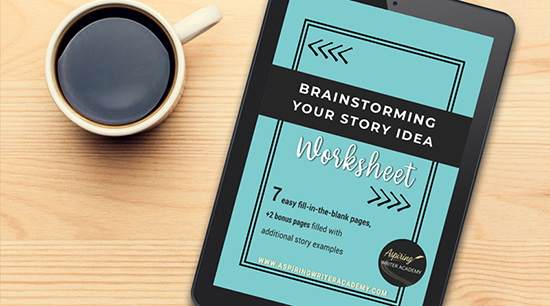
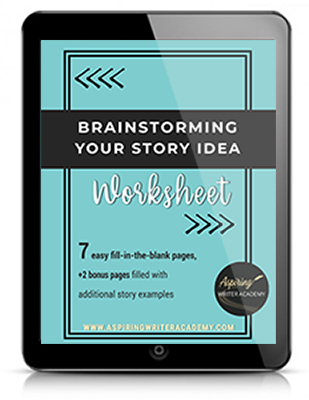
If you like more help developing your story, you may wish to download our Free Brainstorming Your Story Idea Worksheet
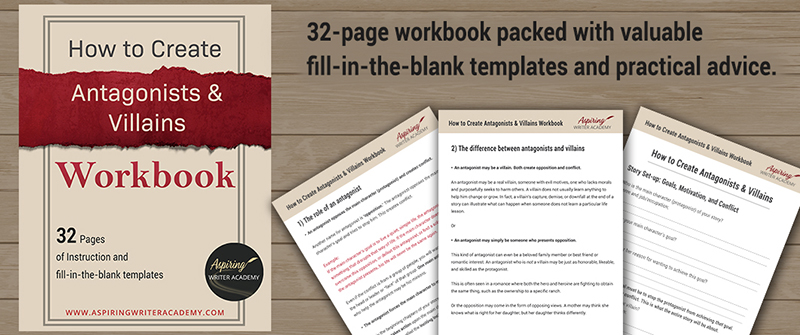
Do you find it difficult to create compelling antagonists and villains for your stories? Do your villains feel cartoonish and unbelievable? Do they lack motivation or a specific game plan? Discover the secrets to crafting villains that will stick with your readers long after they finish your story, with our How to Create Antagonists & Villains Workbook.
This 32-page instructional workbook is packed with valuable fill-in-the-blank templates and practical advice to help you create memorable and effective antagonists and villains. Whether you're a seasoned writer or just starting out, this workbook will take your writing to the next level.
Other Posts You May Like:

Our Goal for Aspiring Writer Academy is to help people learn how to write quality fiction, teach them to publish and promote their work, and to give them the necessary tools to pursue a writing career.
ENTER YOUR EMAIL BELOW
TO GET YOUR FREE
"Brainstorming Your Story Idea Worksheet"
7 easy fill-in-the-blank pages,
+ 2 bonus pages filled with additional story examples.
A valuable tool to develop story plots again and again.
Other Blog Posts You May Like
Scene & Sequel: The Secret to Plotting an Epic Novel
Scene & Sequel: The Secret to Plotting an Epic Novel (Part 2)
Writing Fiction: How to Develop Your Story Premise
12 Quick Tips to Write Dazzling Dialogue
10 Questions to Ask When Creating Characters for Your Story
Macro Edits: Looking at Your Story as a Whole
Basic Story Structure: How to Plot in 6 Steps
Writing Fiction: How To Keep Track of Time in Your Story
Behind the Scenes: Interview with the Authors of the “Sew in Love” Collection