
What Is Episodic Writing? 3 Ways to Avoid Episodic Scenes in Fiction
Has anyone ever called your story episodic?
If an agent, editor, critique partner, beta reader, or contest judge has ever used this term to describe your novel, you may have been left wondering what exactly they meant—and whether it was a good thing or a bad thing.
In fiction, episodic writing can occur when a story feels like a series of events happening one after another without a strong sense of direction or connection between them.
Watch the Video
In this video, Darlene Panzera explains what episodic writing is, why it can weaken your novel, and three ways to avoid writing episodic scenes in fiction.
Keep reading for a closer look at the three ways you can strengthen your story and avoid episodic writing.
What Is Episodic Writing?
An episodic story often feels like a collection of events rather than a connected chain of cause and effect.
The protagonist may spend much of the story reacting to whatever happens next.
One problem appears.
The character deals with it.
Then another problem appears.
The character deals with that one.
Then something completely unexpected happens and sends the character in another direction.
It's almost like being in a snowball fight when you're so busy dodging snowballs that you never have time to throw one of your own.
The problem isn't that stories shouldn't contain unexpected events, setbacks, or disasters. They absolutely should.
The problem occurs when those events don't connect to the protagonist's goals and decisions or move the larger story forward.
A story can have lots of action without having meaningful forward movement.
When scenes begin to feel like isolated episodes, readers may wonder where the story is going and why each event matters.
So how can you avoid this?
1. Give Your Character Purpose
One of the best ways to avoid episodic writing is to create a proactive protagonist.
Readers like characters who make decisions and take action.
Your protagonist should have an objective, a goal, and an action plan for achieving that goal.
In other words, your character needs to want something.
Give Your Protagonist a Goal
At the beginning of the story, your protagonist may be living in their ordinary world when something happens that turns their world upside down.
This could be a disaster, a problem, a discovery, or even an unexpected opportunity.
This is your inciting incident.
The event creates a problem or situation that requires your protagonist to take action.
The protagonist then develops a goal or plan for dealing with that problem.
It won't be easy.
There will be opposition, setbacks, failures, and unexpected complications.
But the protagonist continues moving forward because they are actively pursuing something.
This is an important distinction.
Your protagonist shouldn't simply be a person to whom things happen.
Your protagonist should be the person who makes things happen.
Instead of:
Something happens → protagonist reacts → something else happens → protagonist reacts again
You want more of a progression like:
Something happens → protagonist makes a decision → protagonist takes action → something goes wrong → protagonist makes another decision → protagonist takes another action
The protagonist is driving the plot.
And that purpose carries into individual scenes.
2. Give Your Scenes Purpose
Once your protagonist has an overall story goal, each scene should help move them toward it.
Your character should enter a scene with a scene goal.
They want something.
Perhaps they need information from another character. Maybe they need to convince someone to help them, find something, escape from something, repair a relationship, or accomplish another step toward their larger goal.
But achieving that goal shouldn't be easy.
Give Your Character Opposition
Someone or something should create opposition.
The opposition doesn't necessarily have to be a villain.
It could be the protagonist's best friend, mother, romantic interest, coworker, business partner, or neighbor.
The opposing character simply wants something that conflicts with what your protagonist wants in that scene.
This creates tension.
The characters may argue, disagree, negotiate, compete, or struggle to get what they want.
The scene might end with your protagonist succeeding—or failing.
Either way, something should change.
Ask What the Scene Accomplishes
When evaluating a scene, ask yourself:
- What does my protagonist want in this scene?
- What is stopping them from getting it?
- What does the protagonist learn?
- What is gained?
- What is lost?
- How does the protagonist's situation change?
- How does this scene move the story toward the overall goal?
If you can't answer those questions, the scene may not have enough purpose.
A scene shouldn't exist simply because something interesting happens.
It should exist because something important happens that moves the story forward.
One Scene Should Lead to the Next
This is especially important when trying to avoid episodic writing.
The outcome of one scene should help create the goal or problem for the next scene.
For example:
Scene 1: The protagonist discovers that someone has stolen an important document.
↓
Scene 2: The protagonist decides to confront the person they suspect.
↓
Scene 3: The confrontation reveals that the suspected thief isn't responsible.
↓
Scene 4: The protagonist follows a new clue to discover who actually took the document.
Each scene grows naturally out of what happened before.
The story becomes a chain of connected decisions and consequences rather than a collection of unrelated events.
3. Give Your Overall Story Purpose
Finally, ask yourself a bigger question:
Why did you write this story?
And:
What do you hope readers will gain from reading it?
Not every novel needs to teach a specific moral or deliver an obvious message.
A story written primarily to entertain can still have meaning.
Great stories often resonate with readers because the characters and events touch something deeper.
Perhaps the story explores love, forgiveness, trust, courage, perseverance, sacrifice, family, grief, or redemption.
The protagonist begins the story one way and ends it differently because of everything they experienced along the way.
Show Character Change
Ask yourself:
What can my protagonist do at the end of the story that they couldn't do at the beginning?
Maybe they can finally trust someone.
Maybe they can forgive.
Maybe they can love again.
Maybe they can stand up for themselves.
Maybe they have learned to persevere when things become difficult.
The events of the story should affect the character.
Each scene can teach the protagonist something, challenge an assumption, reveal new information, or force them to make a difficult decision.
Little by little, the character changes.
And that change gives the story greater meaning.
Character Purpose + Scene Purpose = Story Purpose
The key to avoiding episodic writing is to think about how all three levels of your story work together.
Your character needs purpose.
Your protagonist has a goal and takes action to achieve it.
Your scenes need purpose.
Each scene creates conflict, produces an outcome, and moves the protagonist closer to—or sometimes farther from—their overall goal.
Your overall story needs purpose.
The events of the novel lead to meaningful character growth and give readers something to think about, feel, or take away from the story.
When these elements work together, your story feels connected.
Instead of:
This happened. Then this happened. Then this happened.
You have:
This happened → so the character did this → which caused this → forcing the character to do this next.
That's forward movement.
That's a story with direction.
And that's what keeps readers turning pages.
Final Thoughts
If someone has told you that your novel feels episodic, don't panic.
It doesn't necessarily mean your story is broken.
Start by looking at your protagonist, your individual scenes, and your overall story.
Ask yourself:
Does my character have a goal?
Does each scene have a purpose?
Does the overall story have meaning?
When your character has purpose, your scenes have purpose, and your overall story has purpose, you create a story that feels connected, intentional, and meaningful—and one that gives readers a reason to keep turning the pages.
We Believe All Authors Can Aspire to Take Their Writing to the Next Level!
Our Goal for Aspiring Writer Academy is to help people learn how to write quality fiction, teach them to publish and promote their work, and to give them the necessary tools to pursue a writing career.
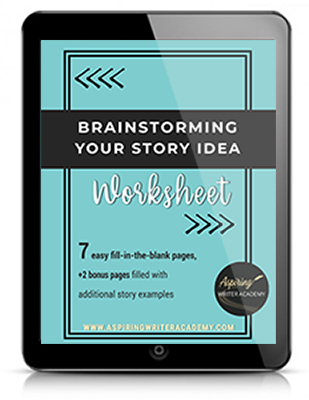
Before You Go… Grab This Free Resource!
If you’re in the early stages of writing your novel, don’t forget to download our free Brainstorming Your Story Idea Worksheet. It includes:
-
Fill-in-the-blank prompts
-
Story structure examples
-
Guided questions
-
Idea-boosting templates
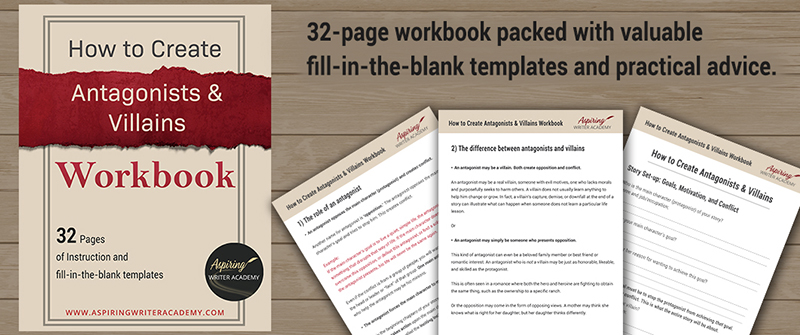
Do you find it difficult to create compelling antagonists and villains for your stories? Do your villains feel cartoonish and unbelievable? Do they lack motivation or a specific game plan? Discover the secrets to crafting villains that will stick with your readers long after they finish your story, with our How to Create Antagonists & Villains Workbook.
This 32-page instructional workbook is packed with valuable fill-in-the-blank templates and practical advice to help you create memorable and effective antagonists and villains. Whether you're a seasoned writer or just starting out, this workbook will take your writing to the next level.
Other Posts You May Like: