How to Structure Act 2 in a Novel (With Movie Examples)
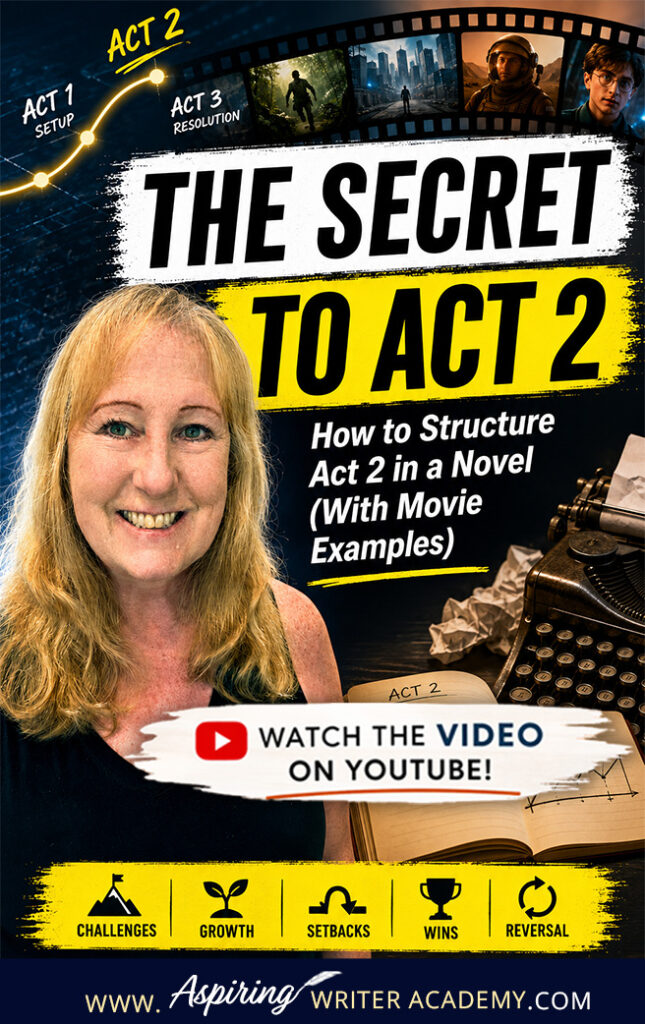
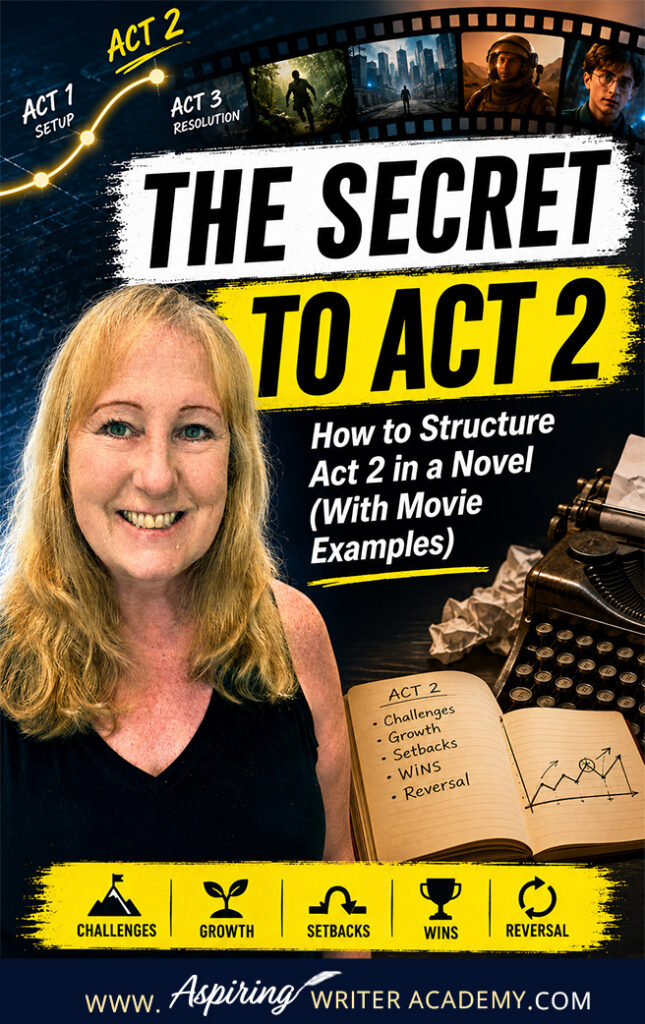
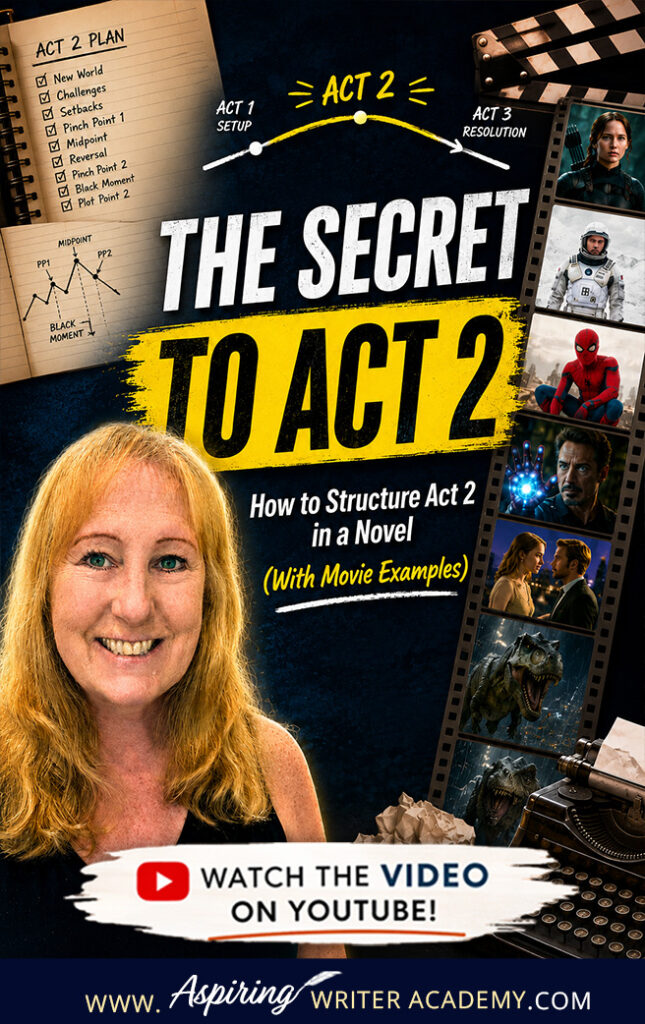
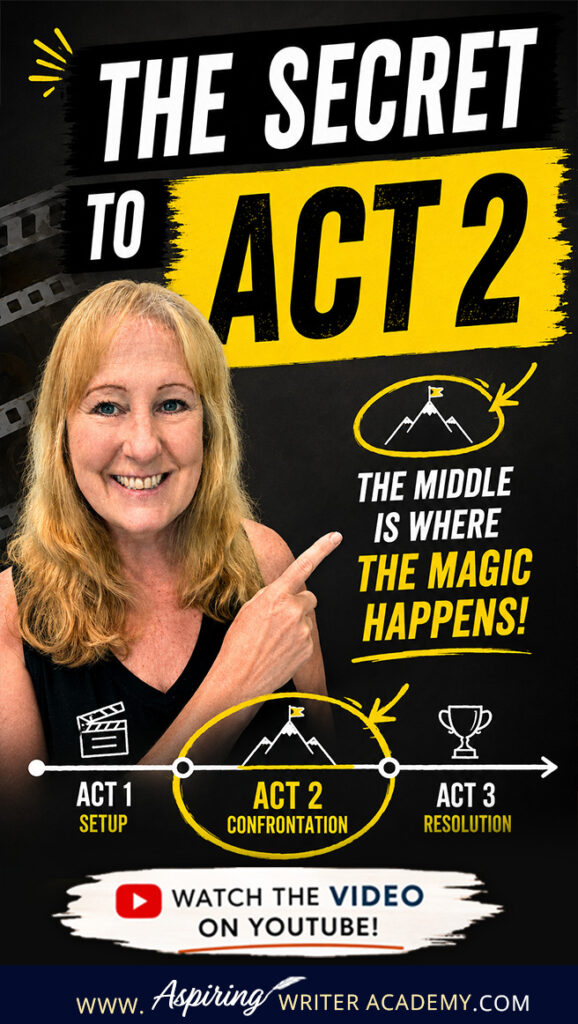
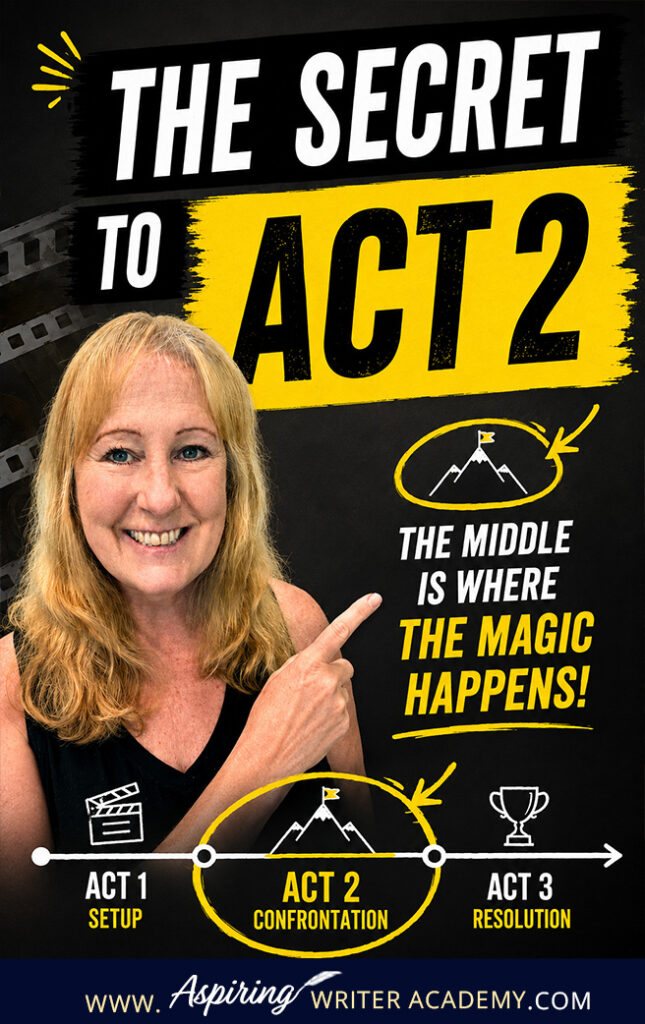
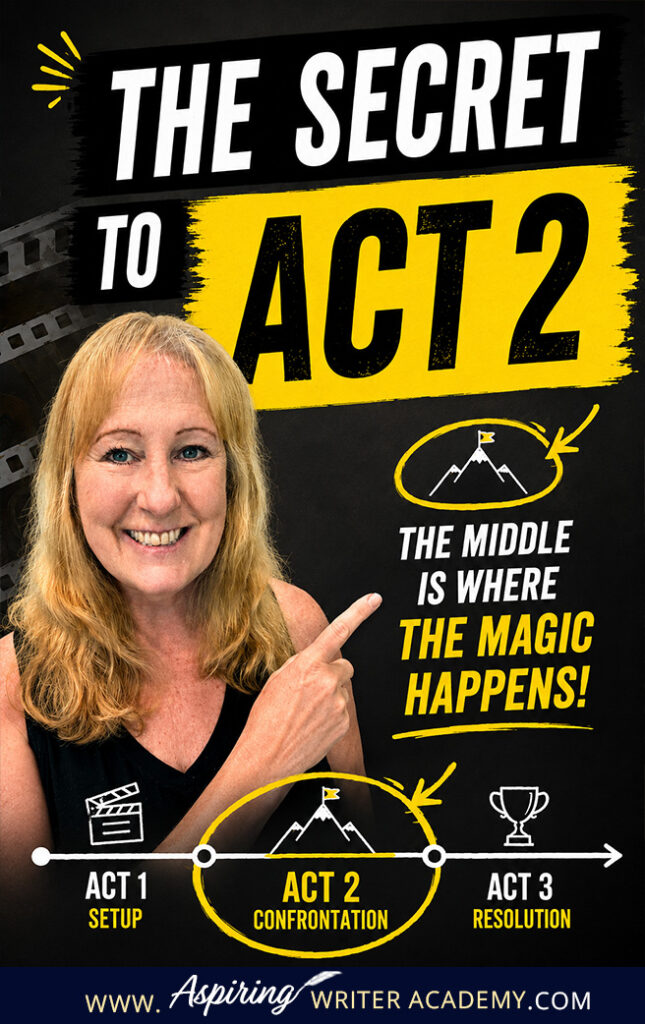
If you’ve ever struggled with the middle of your story, you’re not alone.
Act 2 is where most writers get stuck. It’s the longest part of a novel, and without structure, it can feel like your story is just… wandering. Nothing is really happening, the pacing drags, and suddenly writing feels harder than it should be.
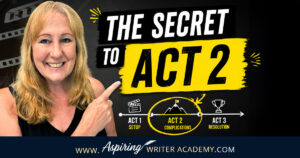
In this post (and video), we’re breaking down exactly how to structure Act 2 from beginning to end using clear storytelling beats and movie examples so you can actually see how it works.
🎬 Watch the Video: How to Structure Act 2
Why Act 2 Matters So Much
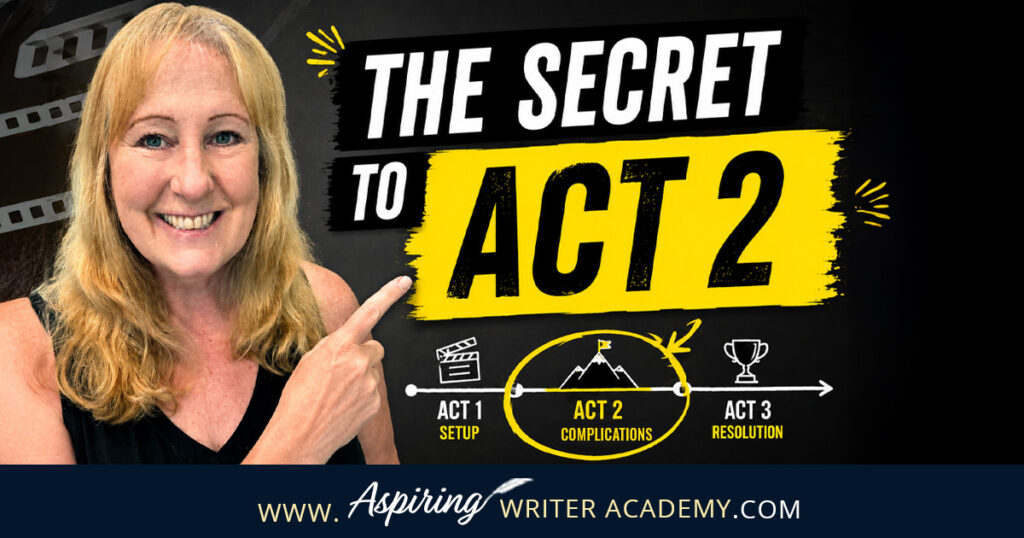
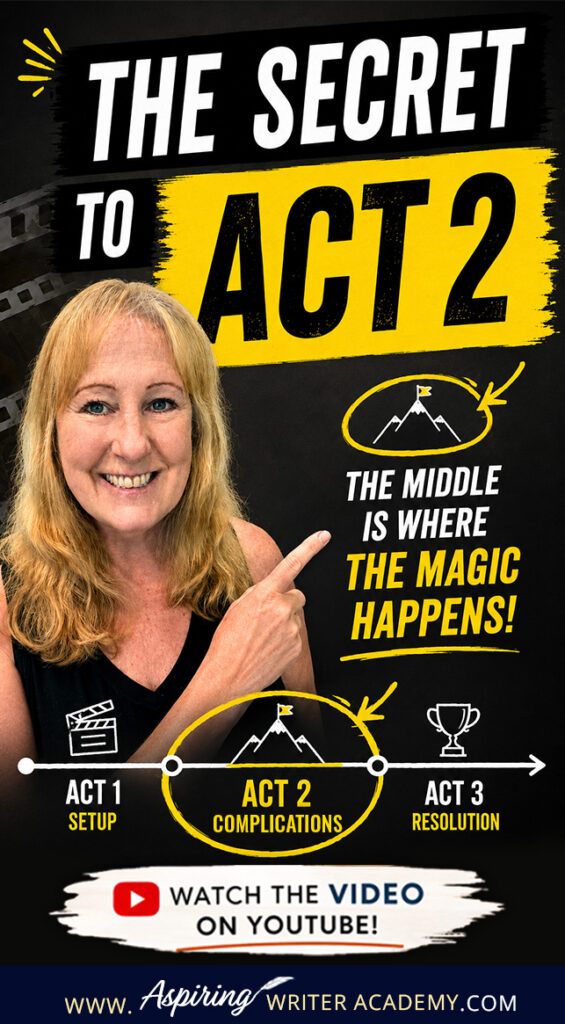
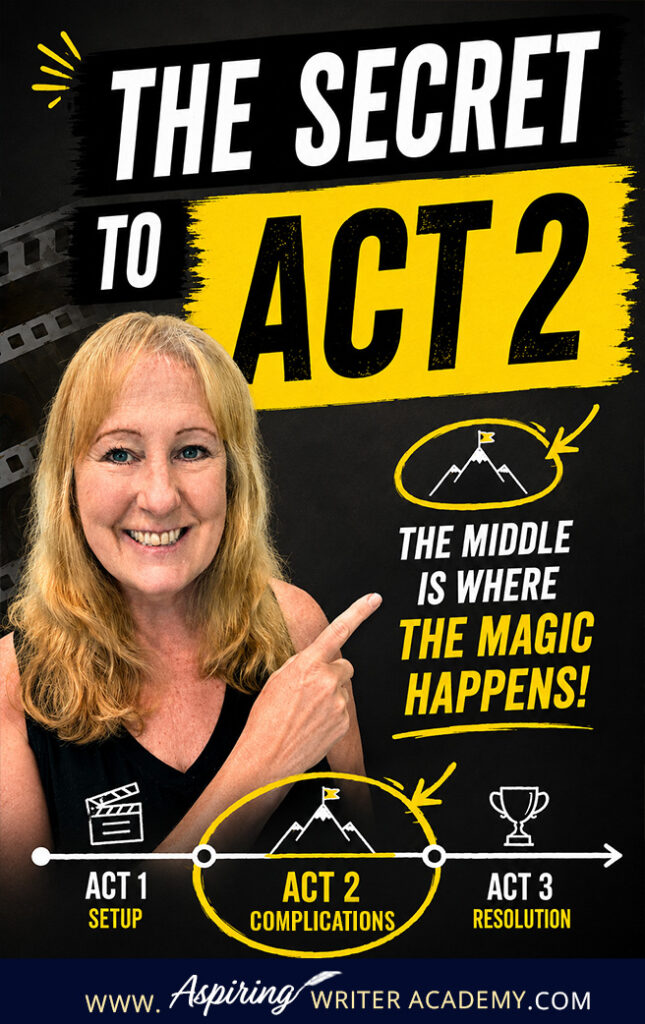
When writing with the three-act structure:
- Act 1 sets up your story
- Act 2 develops and complicates it
- Act 3 delivers the resolution
Act 2 is where your character is tested the most. It’s where they grow, fail, adjust, and push forward through rising conflict.
The key problem?
Most writers don’t know how to structure it.
So let’s fix that.
Act 2 Begins: The Character Takes Action
Act 2 starts when your protagonist makes a decision to act.
In Act 1, your character is presented with an opportunity or problem. But now, they leave their comfort zone and step into a new situation.
This could be:
- A new job
- A quest or mission
- A dangerous journey
- Or the beginning of solving a major problem
This is the moment your story shifts from setup to movement.
The Reactive Phase (The “Figuring It Out” Stage)
In the first half of Act 2, your character is mostly reactive.
They are:
- Learning the rules of a new world
- Struggling to adapt
- Trying to survive or keep up
They are not in control yet—they are responding to the situation.
Movie Examples:
- The Hunger Games – Katniss is taken to the Capitol and must survive unfamiliar danger
- The Devil Wears Prada – Andy struggles to adapt to the fashion world
- Spider-Man: Homecoming – Peter tries to be a hero without fully understanding his limits
- The Matrix – Neo learns the rules of the real world
- The Martian – Mark Watney must survive alone on Mars
This is your “figuring it out” phase.
Building Momentum: Goals, Plans, and Conflict
As Act 2 continues, your story starts to build momentum.
Your character begins to:
- Learn new skills
- Form a plan
- Gather allies or resources
- Take more intentional action
But there’s a catch: the antagonist pushes back.
This creates a rhythm of:
 Wins → setbacks → adjustment → more conflict
Supporting characters may help or hinder the journey, adding tension and unpredictability.
Pinch Point 1: What’s at Stake
Halfway through the first part of Act 2 comes Pinch Point 1.
This is an emotional reminder of what the protagonist stands to lose if they fail.
It raises the stakes and reinforces the danger of the situation.
Movie Examples:
- Interstellar – Cooper sees messages from his children
- The Amazing Spider-Man – Peter realizes Gwen is in danger
- Top Gun: Maverick – Maverick reflects on losing Goose’s son
This moment pushes the character forward emotionally.
Temporary Triumph (The Midpoint Setup)
Right before the midpoint, your character gets a win.
Things finally start to work.
It feels like progress is being made.
This is often where:
- Relationships improve
- A plan seems successful
- Confidence grows
For a brief moment, success feels possible.
Movie Examples:
- The Proposal – The fake relationship starts feeling real
- Doctor Strange – Strange gains confidence in his abilities
- Mission: Impossible – Fallout – Early mission success builds control
Midpoint Reversal (Everything Changes)
Just when everything seems to be working…
The story flips.
This is the midpoint reversal, and it is one of the most important moments in Act 2.
A major event changes everything:
- A secret is revealed
- A plan falls apart
- A betrayal is exposed
- Or a bigger threat appears
The story is no longer heading in the same direction.
Movie Examples:
- The Hunger Games – Rules change mid-competition
- Spider-Man: Homecoming – Peter discovers the villain’s identity
- Harry Potter and the Goblet of Fire – Harry is forced into the tournament
- Jurassic Park – The power goes out, chaos begins
- The Martian – The habitat explodes
Now the stakes are higher, and the protagonist is forced into a new strategy.
Pinch Point 2: Renewed Motivation
After the midpoint reversal, your protagonist shifts.
Now they are more proactive.
Pinch Point 2 reminds them what they could gain if they succeed.
This reignites motivation.
Movie Examples:
- The Hunger Games – Katniss realizes she’s fighting for more than survival
- The Greatest Showman – Barnum sees full potential
- The Secret Life of Walter Mitty – Walter sees what his life could become
The Calm Before the Fall
Before everything collapses, there is often a quieter moment.
Things stabilize briefly:
- Characters connect
- Hope returns
- A sense of control appears
But it doesn’t last.
Movie Examples:
- Avengers: Infinity War – Quiet before final battle
- The Notebook – Emotional reconnection
- Harry Potter and the Goblet of Fire – The Yule Ball
- Twilight – Calm family moments before danger returns
The Black Moment (Everything Falls Apart)
This is the darkest point of your story.
Everything goes wrong:
- Plans fail
- Relationships break
- Truths are revealed
- Or the protagonist makes a devastating mistake
Often, the character falls back into old fears or habits.
Movie Examples:
- Spider-Man 2 – Peter loses his powers
- La La Land – The relationship breaks apart
- The Fault in Our Stars – Terminal illness revealed
- Cast Away – Wilson is lost
- The Dark Knight – Harvey Dent becomes Two-Face
- The Empire Strikes Back – Luke learns Darth Vader is his father
This is the “all is lost” moment.
Plot Point 2: Separation and Transition to Act 3
Everything that happens in the black moment leads directly into Plot Point 2.
This is where:
- The group separates
- The protagonist is left alone
- The journey shifts toward resolution
Movie Examples:
- The Lord of the Rings: Fellowship of the Ring – Frodo continues alone
- La La Land – Mia and Sebastian separate
- The Dark Knight – Gotham turns against Batman
- Spider-Man 2 – Peter distances himself
Now the story is ready for Act 3.
Final Thoughts
Act 2 isn’t random—it’s structured momentum.
Once you understand the beats:
- Reactive phase
- Momentum building
- Midpoint reversal
- Rising stakes
- Black moment
- Plot Point 2
Your middle will stop feeling messy and start feeling intentional.
We Believe All Authors Can Aspire to Take Their Writing to the Next Level!
Our Goal for Aspiring Writer Academy is to help people learn how to write quality fiction, teach them to publish and promote their work, and to give them the necessary tools to pursue a writing career.
Before You Go… Grab This Free Resource!
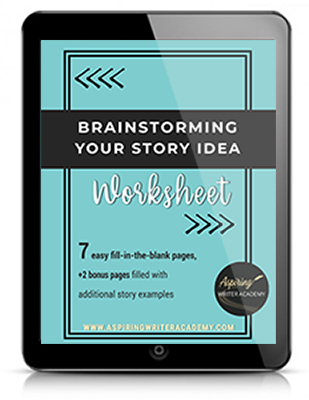
If you’re in the early stages of writing your novel, don’t forget to download our free Brainstorming Your Story Idea Worksheet. It includes:
-
Fill-in-the-blank prompts
-
Story structure examples
-
Guided questions
-
Idea-boosting templates
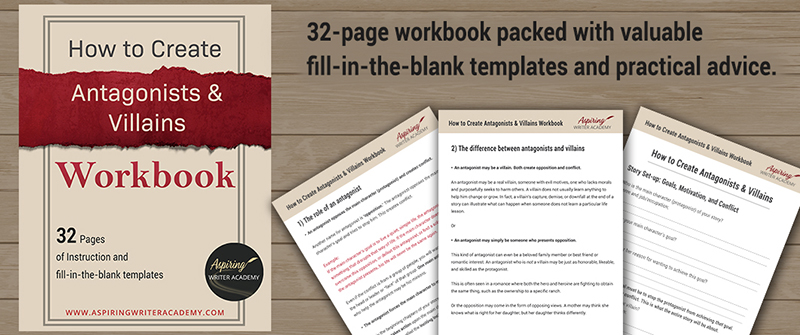
Do you find it difficult to create compelling antagonists and villains for your stories? Do your villains feel cartoonish and unbelievable? Do they lack motivation or a specific game plan? Discover the secrets to crafting villains that will stick with your readers long after they finish your story, with our How to Create Antagonists & Villains Workbook.
This 32-page instructional workbook is packed with valuable fill-in-the-blank templates and practical advice to help you create memorable and effective antagonists and villains. Whether you're a seasoned writer or just starting out, this workbook will take your writing to the next level.
Other Posts You May Like: