Struggling to come up with a story idea or seeking fresh inspiration for your next novel? The Brainstorming Story Ideas section is here to help you unlock your creativity and discover unique concepts that will captivate both you and your readers. Whether you're writing an epic fantasy, a heartwarming romance, or a gripping thriller, this page provides a variety of resources, including creative exercises, writing prompts, brainstorming techniques, and tips for sparking originality.
How to Write Act One (Opening Scenes of Your Novel)
If you’re stuck on how to start your novel, this guide to writing Act One will help. Discover how to craft engaging opening scenes, introduce your main character, build your story world, and create a compelling story question that keeps readers turning pages. A must-read for anyone serious about writing a strong first chapter.
Stuck On Your Story? Try the “15 Things That Could Happen” Brainstorming Method
Have you ever been happily writing your story… and then suddenly hit a wall? You reach a scene where you don’t know what happens next.The momentum disappears.Indecision creeps in.And before long, anxiety starts whispering: What if I’ve written myself into a corner? If this sounds familiar – you’re not alone. Every fiction writer experiences this…
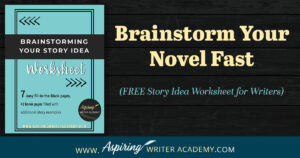
Brainstorm Your Novel Fast (FREE Story Idea Worksheet for Writers)
Have you ever had a story idea floating around in your head… but you weren’t sure how to turn it into an actual plot? Or maybe you want to write a book, but you feel stuck before you even start. Good news – brainstorming your story doesn’t have to be overwhelming. We created a FREE…
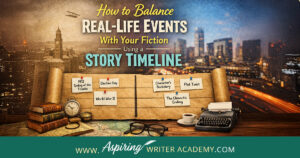
How to Balance Real-Life Events With Your Fiction Using a Story Timeline
We Believe All Authors Can Aspire to Take Their Writing to the Next Level! Our Goal for Aspiring Writer Academy is to help people learn how to write quality fiction, teach them to publish and promote their work, and to give them the necessary tools to pursue a writing career. Before You Go… Grab This Free…
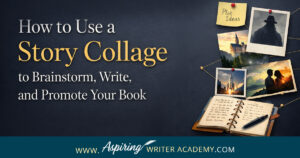
How to Use a Story Collage to Brainstorm, Write, and Promote Your Book
When you first start a new story, you don’t always have everything figured out-and that’s normal. Maybe you have a vague idea of a character, a single scene you can’t stop thinking about, or just a strong sense of place. What you don’t have yet is the full picture. That’s where a story collage comes…
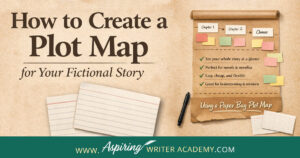
How to Create a Plot Map for Your Fictional Story
What is a plot map? While many writers brainstorm story ideas using connected bubbles or bullet lists, we’ll show you how to create a more dynamic plot map that offers a full visual outline of your story-using a simple paper bag! In How to Create a Plot Map for Your Fictional Story, we explore the…
How to Write a Scene Goal in Fiction Writing
How to Write a Scene Goal in Fiction Writing Writing a novel isn’t just about having a plot-it’s about understanding what your characters want and why. Every scene should bring your character closer to achieving their ultimate goal. One of the key tools professional writers use to do this is a scene goal, which helps…

How to Find Great Story Ideas for Your Fictional Novel
As a writer, inspiration for compelling stories can be found all around you-if you know where to look. The world is teeming with ideas just waiting to be discovered. Whether it’s news stories, your favorite hobbies, personal experiences, or even places you’ve traveled, there are endless sources of inspiration right at your fingertips. In How…
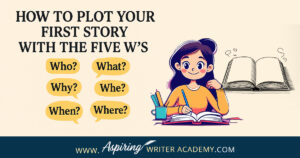
How to Plot Your First Story with the Five W’s: Who? What? Why? When? and Where?
Ready to start writing your first story? Where do you begin? With a character? A setting? Or an exciting idea for a scene? What do you need to create a working outline? How to Plot Your First Story with the Five W’s: Who? What? Why? When? Where? shows you how asking these key questions can…
How to Create a Basic Outline of a Fictional Novel with Characters, Plot, and Setting in One
Looking for a faster, easier way to brainstorm a new story idea? Wondering where to begin—characters, plot, or setting? You can start with any of these elements, but it’s essential to consider how they interconnect, as adjustments may be necessary to craft a cohesive story that works.
How to Outline a Fictional Novel with Characters, Plot, and Setting in One Day offers a set of insightful questions designed to help you create a basic outline for your new fictional story—all in a single session.
How to Write Your Very First Fiction Novel
Have you ever thought of writing a book? Do you need help coming up with a story idea or creating a working outline? How do you create a cast of characters? Do you need a villain? What is a simple way to plot if you do not have any experience?
What are the basics you need to know to get started?
In our post, How to Write Your Very First Fiction Novel, we go over the first steps you need to take to turn your story idea into a working manuscript that you can be proud of.
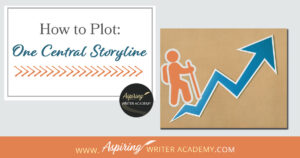
How to Plot: One Central Storyline
When others ask what your story is about, do you have trouble coming up with an answer that does not take fifteen minutes to explain? Can you condense the main plot down into a single sentence? Is there a focused theme? Do the subplots relate to the core idea of your novel, or do they go off in a million different directions?
How to Plot: One Central Storyline helps you avoid ‘the eyeroll,’ polite nod, and ‘glazed look’ of agents, editors, and readers so they are excited to read each page.
A Beginner’s Guide to the Top 10 Genres for Popular Fiction
Would you like to write a book? Have you started writing but aren’t sure where your novel fits in the marketplace? If you are new to writing, you must first decide—What kind of story do you want to write? Thriller, fantasy, mystery, romance? Each genre (category) of fiction features different kinds of characters, setting, plot, and yes, even story resolutions.
In A Beginner’s Guide to the Top 10 Genres for Popular Fiction, we help you decide what kind of story is best for you.
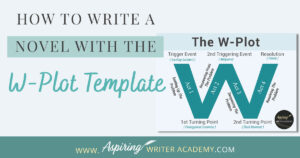
How to Write a Novel with the W-Plot Template
Do you struggle with plotting? A simple, easy-to-follow template for writing a fictional story is the W-Plot, perfect for both new writers and non-plotters. The W-Plot structure allows you freedom to create yet keeps your story on track all the way to that grand satisfying end.
In our post, How to Write a Novel with the W-Plot Template, we break down each step to take the frustration out of plotting and give you tips to write a story readers will love.
How to Use Themes in Your Fictional Story
Do you know your story’s theme? Or the difference between a theme and a moral? A theme is the glue that holds your story together and without one, your readers may find themselves scratching their heads wondering what your story is really about.
In our post, How to Use Themes in Your Fictional Story, we give examples of theme, how to weave theme into your story for greater focus, and the right and wrong way to reveal theme at the end of your fictional masterpiece.
Write Your First Novel: How Do You Start?
Are you finally ready to write that book you always wanted to write one day? Great! How do you start? Who should be your main character? What will the story be about? Does there have to be a villain? When and where should the story take place?
In our post, Write Your First Novel: How Do You Start? we help you choose your main character, pinpoint the opposition, and create a story that you will be excited to write!
How to Find a Great Story Idea in 4 Easy Steps
How do you come up with new story ideas for a fictional novel? Do you start with a situation or a character or with a concept, theme, or location? How do you know if you have a solid story idea? What information is needed to get started?
In our post, How to Find a Great Story Idea in 4 Easy Steps, we lay out the four components that will help you create a working story idea that you can turn into a fictional novel.
How to Brainstorm a New Novel Using Goal, Motivation, and Conflict
Looking for a new story idea? Before you can sit down and start writing a work of fiction, you will need to brainstorm three key elements:
– What is your character’s Goal? (What does he want?)
– What is this character’s Motivation? (Why does he want it?)
– What is the Conflict your character will face? (What is stopping him from getting it?)
In our post, How to Brainstorm a New Novel Using Goal, Motivation, and Conflict, we show you how to create a working outline to help get your story started!
How Writing Prompts Can Improve Your Fictional Story
Some writers may love writing prompts while others think they are a waste of valuable time. Time better spent working on their story.
But what if a few quick specific writing prompt sessions could help you brainstorm plot holes, deepen point-of-view, sketch upcoming scenes, and supercharge character dialogue?
In How Writing Prompts Can Improve Your Fictional Story, we show how these fast sprints can boost motivation, improve writing skills, and enhance your fictional novel.
Fiction Writing: 5 Key Differences Between a Novel and a Novella
Are you confused about the differences between a novel and a novella? Perhaps you know one is longer than the other, but you aren’t sure if writing a novella is worth your time. Do they make any money? Who publishes novellas? Can they be used for promotion? In our post, Fiction Writing: 5 Key Differences Between a Novel and a Novella, we discuss all these things and more so that you can decide which choice is right for you.
Brainstorming Fiction: What to Do When Your Story Gets “Stuck”
When writing fiction, there may be times when your creativity stalls and you don’t know which way the story should go. Or perhaps the obvious next step forward seems boring.
In our post, Brainstorming Fiction: What to Do When Your Story Gets “Stuck” we give you a tool that can be used for characters, conflict, plot, setting, or dialogue to unlock your imagination, spice up your acts, and make your story as interesting and engaging as it can possibly be!
How to Plot Your Fictional Novel (with Free Template Included)
Solid Story Structure. What is it? If you wish to write a satisfying fictional story for your readers, then you must learn the specific elements or ‘Plot Points’ that nearly all Popular Fiction stories share. Using our Free Plot Sketch Template, included in our post, How to Plot Your Fictional Novel, you will be able to identify the various turning points in both movies and books and keep your own stories on track from beginning to end.
How to Research a Setting for Your Fictional Novel
Settings. Where does your story take place? Is it a real place?
Even if you choose to ‘make up’ a setting, you may still want to base some of the details off a real place to make it feel real. Researching a setting may also inspire character or plot details.
In our post, How to Research a Setting for Your Fictional Novel, you can come along on a photo-journal research trip and learn a few tricks to create realistic settings for your own story.
5 Questions to Create Believable Villains
What is the difference between an antagonist and a villain? What motivates a villain to do heartless, hurtful, vindictive, terrible things? How can you bring the villain in your fictional story to life for your reader in an identifiable, believable, understandable way?
In our post, 5 Questions to Create Believable Villains, we explore the first questions you should ask when you start to brainstorm this type of character for your story.
Why Your Characters Need Story-Worthy Goals
Have you ever been told by an agent or editor, reviewer, critique partner, or reader that your writing was blah because your main character’s goal was weak, not strong enough, that it wasn’t ‘story-worthy?’
What does ‘story-worthy’ even mean?
In the post below, we will discuss what makes a goal story-worthy so that you can write engaging stories that hold your reader’s attention from beginning to end.